Philly investors think online gaming is an opportunity ‘screaming from the roof’

As seen on Billy Penn

Who cares about esports? You might be surprised.


The idea of esports might conjure the stereotypical image of a lonely nerd sitting at the computer in his mother’s basement, but these days, competitive online gaming is a hot market.

An esports athlete can net $50,000 a year plus benefits — and that’s just the starting pay in the Overwatch League. The cap for a high-performing player is somewhere in the millions. The esports industry made $655 million in revenue in 2017, according to a Newzoo report. This year, it’s expected to surpass an impressive $900 million.

No surprise, then, that Philly sports, entertainment and venture capital companies are scrambling to be part of the digital gold rush.

Harris Blitzer Sports & Entertainment, which owns the Sixers, jumped into the market and made history in September 2016 when it acquired Team Dignitas, an internationally-known esports team from the United Kingdom.


76ers

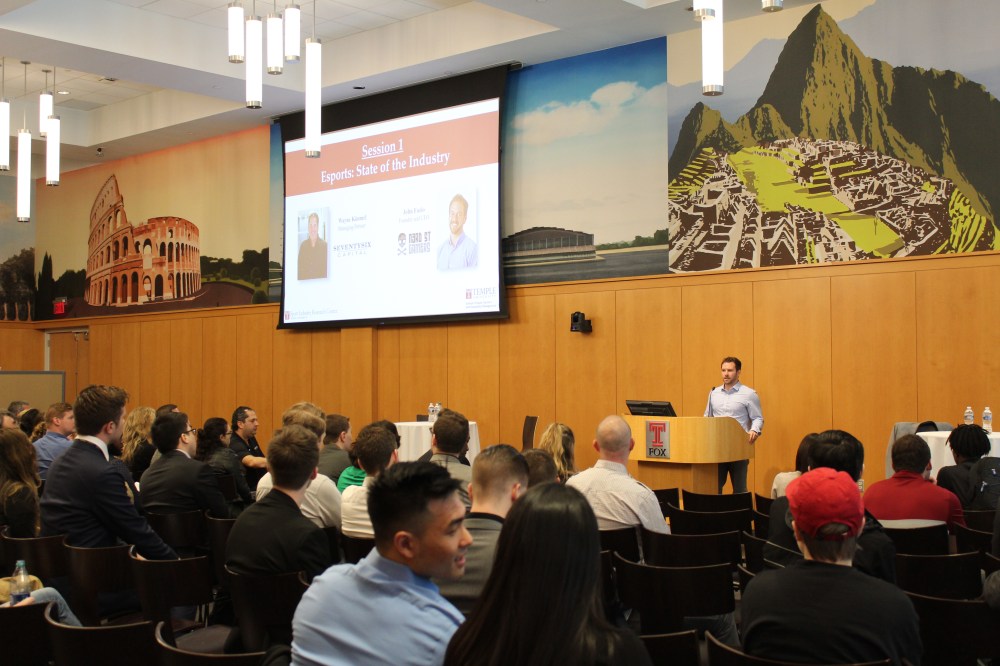
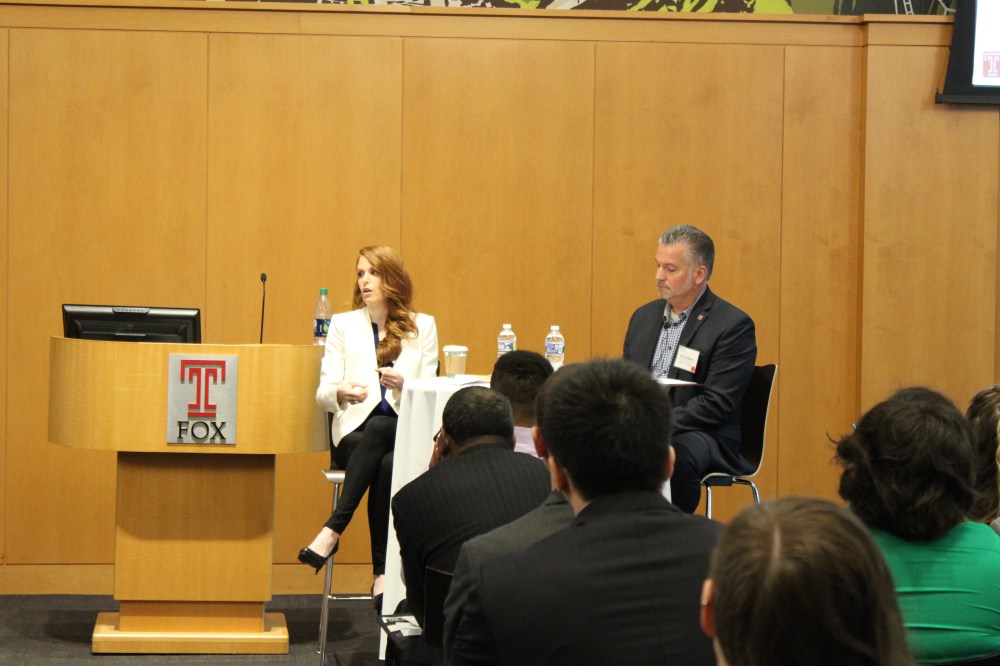
Lara Toscami Weems of Sixers owner Harris Blitzer explains why the company got into esports at Temple’s panel.

“You hear these incredible stats about esports…it became a race,” said Lara Toscani Weems, communications director with Harris Blitzer, at an esports symposium at Temple at the end of April. “We wanted a team that felt like the 76ers…We’re looking for places where there’s opportunity for growth.”

Currently, Dignitas plays seven different games competitively, including first-person shooter Counter-Strike: Global Offensive. The challenge so far is marketing them without shoving it in people’s faces.

“We are mindful of the 76er audiences, we’ll find a creative way…We’re aware that the audiences are different,” she said. Asked what the next big game will be, Weems had a ready answer: “Everyone’s talking about Fortnite right now.” Recording artist Drake recently made headlines playing Fortnite with one of the game’s most popular streamers.

Meanwhile, Comcast Spectacor, owner of the Flyers, also owns the Philadelphia Fusion, an Overwatch team currently competing at the Blizzard Arena in Burbank, CA. Since they play far away, there are official viewing parties in Philly to drum up hometown support. “We need these local events, our boots on the ground,” said Joe Marsh, Fusion’s finance director.

Plans are in the works to build a home arena, possibly in University City or Northern Liberties.

“We’re mapping out where our fans are,” Marsh said. “We’ve seen our following grow because we’re from Philadelphia, they don’t want to cheer for New York.”

The Union, Philly’s pro soccer team, also participates in esports via eMLS, a competition in the FIFA Global Series. This March, the Union hosted the eSports Open Tournament and signed the winner, 17-year-old Cormac Dooley, to compete at the eMLS Cup at PAX East in Boston.

N3rd Street Gamers, based in Old City, hosts game tournaments and sponsors local esports events, like next month’s Fusion Showcase Overwatch tournament at the TooManyGames convention. The prize pot is a sweet $5,000. “I’m really excited for what’s to come,” said CEO John Fazio. “I think we forget how really underdeveloped this industry is.”

Fazio

N3rd Street Gamers CEO John Fazio discusses esports on the local level at Temple.

Equipment cost is one barrier for prospective gamers.

“To play football, you walk outside and throw a football,” Fazio said. “To play esports, you buy a computer, or you buy a console.” A player also needs a fast internet connection — and eventually, sponsorships. To join the Overwatch League alone, signing a team costs an alleged $20 million.

Wayne Kimmel, managing director of VC firm SeventySix Capital, invested in N3rd Street Gamers after seeing the potential for this new industry.

“We think this esports world is the next, next thing…We’re thrilled to be investors,” he said. “The opportunity is just screaming from the roof. We gotta bring people out, see [gamers] playing, yelling, hugging each other after the match. People need to see these things with their own two eyes, it’s incredible.”

The Fusion, Philly’s hot new esports team, can’t wait to play in its home city

As seen on Billy Penn


The Comcast-owned Overwatch League team is currently based in California

Philly’s newest sports team has it all – experienced coaches, devoted fans, and lively commentators watching their every move on live broadcasts. Watch for just a moment, and you’ll soon realize it’s way more extreme than other sports you’re used to: Explosions, giant mech suits and aerial fights abound. Though it sounds exceedingly dangerous, each match takes place on a screen far detached from reality. Also, the winning team takes home a million dollars. Welcome to esports!

The Philadelphia Fusion is an international esports team made up of 12 people who share the same passion: Playing Overwatch. Overwatch is a team-based, online shooting game for the PC, PlayStation 4 and the Xbox One, where the main concept is generally pretty simple – two teams of six fight to capture a control point and keep the other team from taking it back, or defend and escort the “payload” such as a truck carrying goods from one side of the playfield to the other while fending off attackers. If you have played the ever-popular Team Fortress 2, this will all sound quite familiar to you.

Despite the simple objective, there are infinite levels of complexity involved. There are more than 20 “maps,” or playing fields, to compete on with different elevations, scenery, chokepoints and hiding spots. Players select a “hero” from a roster of 26 different characters separated into four distinct roles, like healing damage done to teammates or attacking on the front lines. Each hero has their own unique abilities, weaponry and playing style – so with every combination of heroes selected on a six-player team, players must adapt to changing environments, enemy team rosters and making sure their own team is well balanced.

You might think it’s silly, but 10 million viewers tuned in to watch the first week’s matches alone. The team is owned by Comcast Spectacor, who also own the Flyers – the teams even share the black and orange uniform colors. The team’s president is Tucker Roberts, son of Comcast CEO Brian Roberts. Comcast chose Wahoo’s in University City to host the first official watching party of Fusion’s first match on stage against the Houston Outlaws on Jan. 11th, and hundreds of people showed up thanks to the spread of social media marketing and word of mouth.
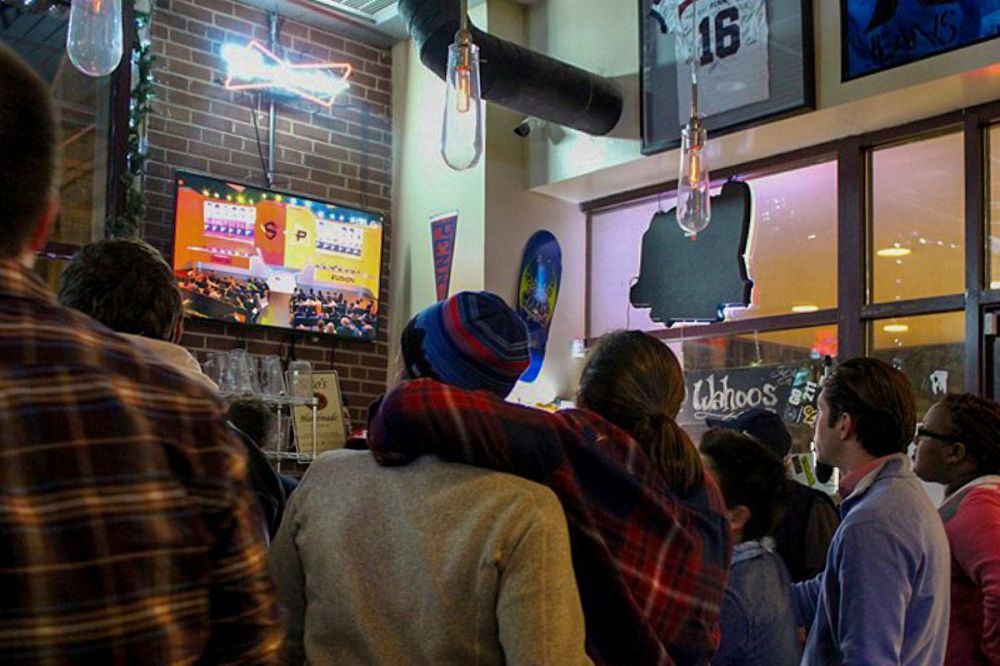
fans

Spectators watch the Fusion play against the Shanghai Dragons in their Jan. 26 match at Wahoo’s.

“You would have thought you were watching the Superbowl, because the way the people were reacting, when Fusion got a kill…it was crazy,” said Sean Rinko, a manager at Wahoo’s. Since then, Wahoo’s has hosted live streams of each Philadelphia Fusion match.

“That Thursday was our biggest turnout – we had tents up on our patio, so we were at max capacity. We actually had to stop letting people in,” Rinko said. “It’s kind of like any other sporting event, you know, like if there’s a soccer game on, we have a lot of people come watch soccer. So it’s all just kind of part of the vibe we have going here. It’s nice and it’s fun, and most of the regulars, well at first they were like ‘What are you watching, video games?’ And after they watched a little bit and they found out, hey, this is Philly’s team, (their attitude) definitely changed.”

The Fusion team competes twice a week in the Overwatch League, now in its inaugural season. The 12 OWL teams are named after different regions and divided into the Pacific and the Atlantic divisions, but they all currently play out of the Blizzard Esports Arena in Burbank, CA.

Soon, the plan is to move the teams to local home arenas for each region. “There are plans to move to Philly, but the timing is dependent on so many factors,” head coach Yann “Kirby” Luu wrote in an email interview. “We are excited for the future and can’t wait to get to Philly. We have already seen the passion the fans have for esports. Even though we represent the city of Philadelphia, I’ve yet to go there myself, so really it’s the entire idea of being there, close to the local Fusion fans, that I’m excited about.  Philly has the best fans in all of sports.”
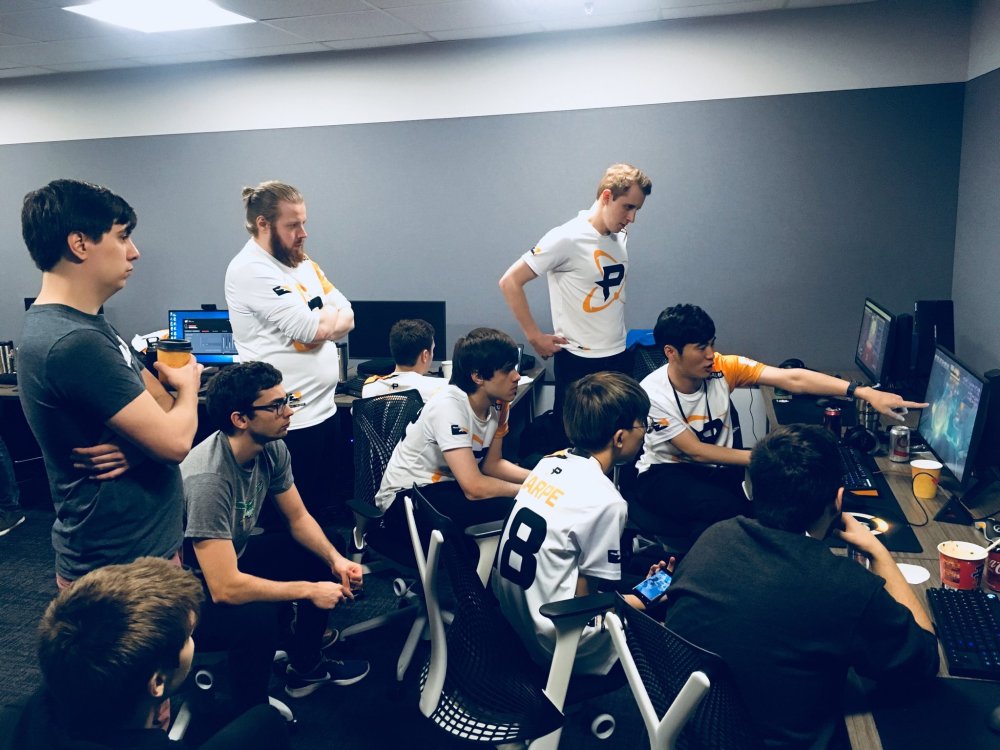
strategy

The Fusion work on their play strategy. (@PHL_Fusion on Twitter)

Luu and assistant coaches Se-Hwi “NamedHwi” Go and Elliot Hayes advise the Philadelphia Fusion team between matches. Their diverse roster boasts four members from South Korea, and one member each from Finland, Russia, Canada, Spain, France, Israel, Sweden and the U.K.

“We went through a very extensive trial process in all three major regions (North America, Europe, and Korea) to find the best available players, but also players that we thought would work well together, and make the best possible team,” Luu wrote. Despite the geographical differences, the players communicate in a common language. “Even though we have players from many different countries, all of the European players are used to playing with people from different nationalities, and therefore communicating in English. So the challenge is more about bridging the gap between our Korean and Western players, which we’re trying to achieve by also having a multicultural coaching staff, and providing English tutoring to those who need it.”

Philly Fusion player Gael “Poko” Gouzerch from Nîmes, France is known for skillfully deploying his “ult,” or ultimate move, as the character D.Va. He’s caught the world by storm with his flashy self-destruct move, to the point where several articles have gone in-depth to study his technique and have renamed the move the “Poko Bomb.” Of course, watching players compete on the big stage for huge sums of money, like him, is enticing to anyone with a copy of the game.
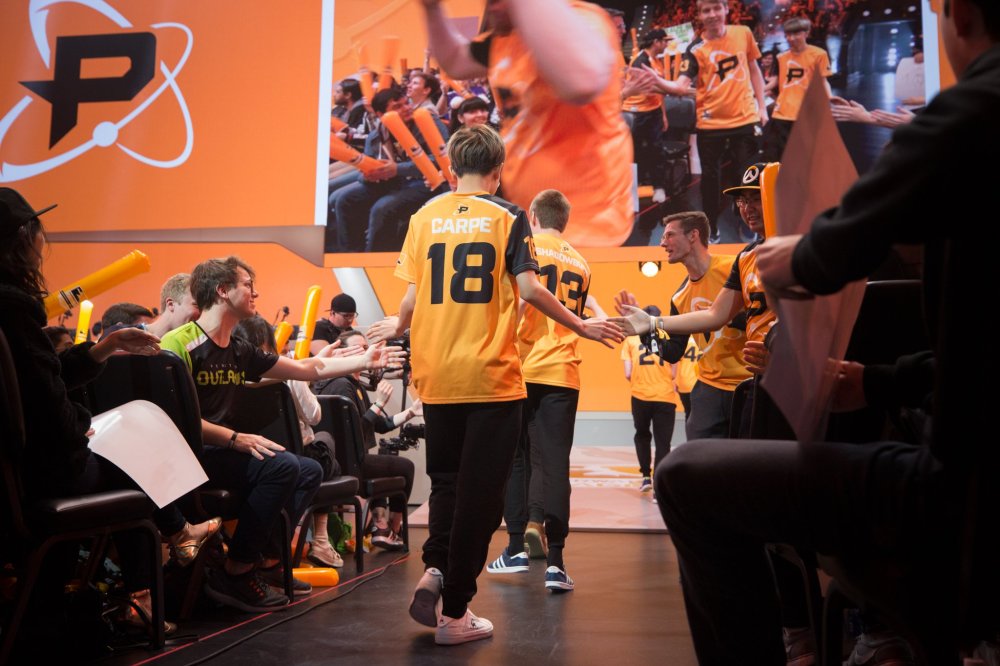
FusionVersusSFShockFromTwitter

The Fusion walk up to play against the San Francisco Shock in Burbank. (Twitter)

To become a pro gamer, it takes “a lot of sacrifices and dedication – sometimes your friends are gonna ask you to party Sunday night but you have scrims (practice matches) so you can’t,” Gouzerch wrote in an email interview. “You have to be able to put your friends and family on hold to be the best. I started by playing with friends of mine at Overwatch and I was spotted thanks to my good performance in tournaments. My daily life hasn’t changed that much because I still have to wake up, practice, eat, practice and sleep but now it’s in LA. We compete every week on the sickest stage and we are paid a lot.”

“Poko” is happy to know about local support for the Fusion here. “We didn’t expect so much support from Philly fans, we are very proud to represent such a beautiful city and we are gonna do our best to make them proud,” he wrote. “It’s not up to me, but if I had to decide I would definitely go to Philly sooner. I’ve heard they have some amazing cheesesteaks, and the Eagles are the dream squad.”

Jun Hwuy An, a sophomore at UPenn, is studying for his BA at the Wharton School of Business and LALS at the College of Arts and Sciences. He’s also the Overwatch Liaison chair at the University of Pennsylvania eSports Association, an organization with 220 active members that started in Sept. 2016. Along with his friend and Events Chair, Ryan Nguyen, they create esports events for interested UPenn students and help coach the competitive team.

“I have watched all the games thus far, and I think Philly Fusion is doing pretty good in their games,” An wrote in an email interview. “The one critique I have is their energy – when they win, they are energized and more focused, but once losses hit them, they seem to get sluggish, slow down, and fall apart. This was crucial during their nail-biting match against the LA Gladiators. I do not think they should have been reverse-swept at all; in fact, they should have carried their momentum and destroyed the Gladiators in the third match. Use that energy, boys.”

Some criticize esports for being all-digital. “Esports is essentially like traditional sports, sans the physicality of it,” An wrote. “Both commit a tremendous time and effort to mastering their craft and they sacrifice a bit of their wellbeing for what they love. Esports players practice, they utilize teamwork and incredible player skill to win games, and they must be examples of good citizens for their viewers. Of course, esports has blown up recently thanks to the likes of Overwatch, but again, it is still a sport that in its essence, it accumulates all of the features of sports and sporty behavior. One thing that’s cool about esports, however, is that most viewers of esports play the game while most people who watch football, for example, don’t play football.”

fusion

The Fusion pose for their promo photo (overwatchleague.com).

The Fusion will compete throughout all four stages of Season 1 until it ends June 16th and the highest-performing teams will be announced to play the title matches. Two players are currently on the bench: Simon “snillo” Ekström will begin play in March when he is old enough to legally compete at age 18. Su-Min “SADO” Kim, who was fined and suspended for an account boosting infraction, won’t be competing until Stage 4 in May.

Fusion suffered a particularly tough loss to the LA Gladiators after they were initially up by two points in their Jan. 18 match. “We’re a bit disappointed about our loss versus the Gladiators because we feel like we should’ve been able to close that game since we were up 2-0, but the Gladiators punished our mistakes and came back,” Luu said. “Overall we’re not completely satisfied, since we think we have a pretty high skill ceiling with this roster, but considering our bumpy pre-season, we’re not in too bad a spot.” Luckily, the Fusion came back after that with a 3-2 win in their Jan. 25 game against New York Excelsior, marking New York’s first loss in the league to date.


Stage 1 matches have concluded with Fusion’s 6 match wins versus 4 losses. The Philadelphia Fusion face off against the Boston Uprising in their first match of Stage 2 Feb. 22 at 9 p.m. Watch live online at overwatchleague.com or twitch.tv/overwatchleague, or head over to Wahoo’s at 3180 Chestnut St. to watch among fans.
PAX Unplugged celebrates gaming’s inclusive future

As seen on Technical.ly Philly

The Pennsylvania Convention Center featured tabletop games galore last month — and, more importantly, players of all stripes.


Dragons and castles, sinking battleships and miniature Space Marines. What do they all have in common? A table, some pieces and people who love interactive storytelling.

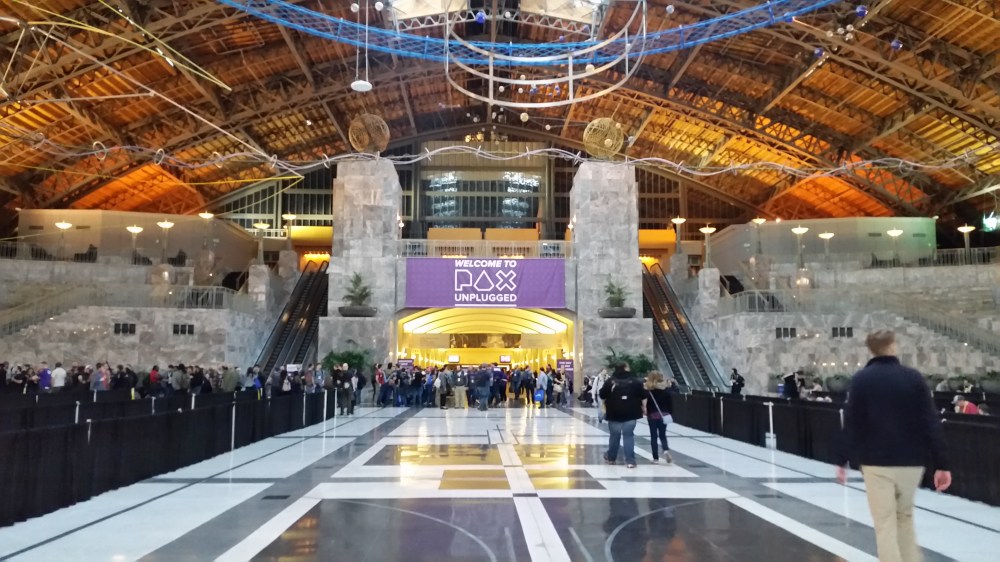
Tabletop games took the main stage at the inaugural PAX Unplugged convention, including board games, card games and roleplaying games like Dungeons & Dragons. The event took place at the Pennsylvania Convention Center in Philadelphia last month.

PAX Entrance

Attendees walk through the entrance to PAX Unplugged in the Pennsylvania Convention Center.

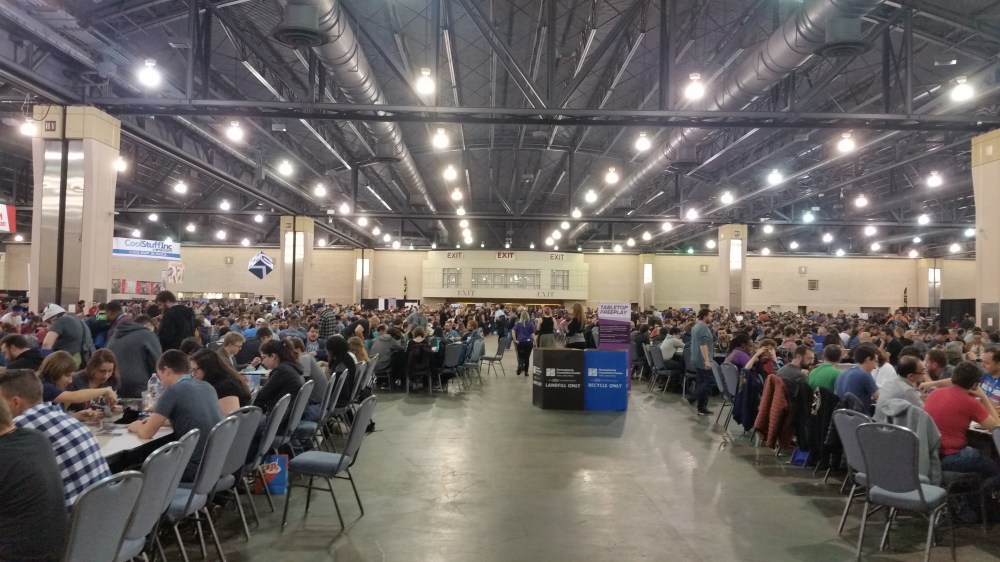
Like other PAX events in Seattle, Boston, San Antonio and Melbourne, Australia, Unplugged includes more things than you can roll a die at. Such attractions include an exhibit hall, a tabletop freeplay room with a game-borrowing library and space for hundreds of players, a “First Look” area to see brand-new games and an “Alpha Build” room to playtest indie games.

The convention has also given marginalized groups a voice with the inclusion of the “Diversity Lounge,” which this year included representatives from I Need Diverse Games, local advocate and cosplayer Jay Justice, Toronto Gaymers and mental health advocates TakeThis.org.

Freeplay room

Freeplay Room: Hundreds of attendees check out games from the board game library to play with their friends.

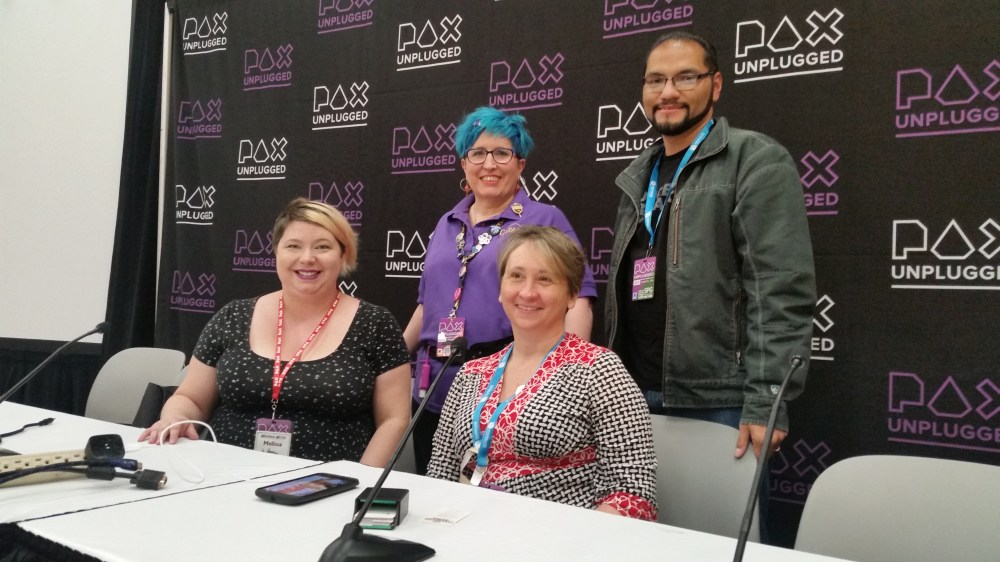
One panel discussion, “Organizing Play: The Perils and Pitfalls of Gathering Gamers,” centered around how to create spaces that make people feel welcome to play in.

“Any good nerd who stumbles into your world, you want to trick them into staying and playing games with you,” said panel presenter Melissa Lewis-Gentry, business manager of Modern Myths in Northampton, Mass. “I will pair new people with a friendly veteran, and say ‘Here is a new person, can you take care of them?’ Be okay with losing the board game and telling them all the right strategies.”

Panel Speakers

Left to right: Panel speakers Melissa Lewis-Gentry, Donna Prior, Maury Brown and Robert Adducci pose at the end of their “Organizing Play – The Perils and Pitfalls of Gathering Gamers” panel.

Another presenter, Donna Prior, prefers to host games in a venue other than a game store, because new people can find the clientele intimidating. “Nobody wants to feel stupid,” they said. “And when trying to market to casual gamers, don’t call them ‘gamers.’ There’s a certain perspective on what gamers are.”

Prior is the organized play coordinator of Catan Studio, as well as founder and executive director of OrcaCon, an inclusive tabletop convention in Bellevue, Wash., that takes place each January. OrcaCon is going on its third year, and the new theme puts indigenous American game designers at the forefront. They first got involved with gaming through Dungeons & Dragons in the ’80s, and then Magic: The Gathering in the ’90s. Now they travel throughout North America and the UK to teach the game Settlers of Catan and host business meetings in Germany with the game’s creator and the rest of the team.

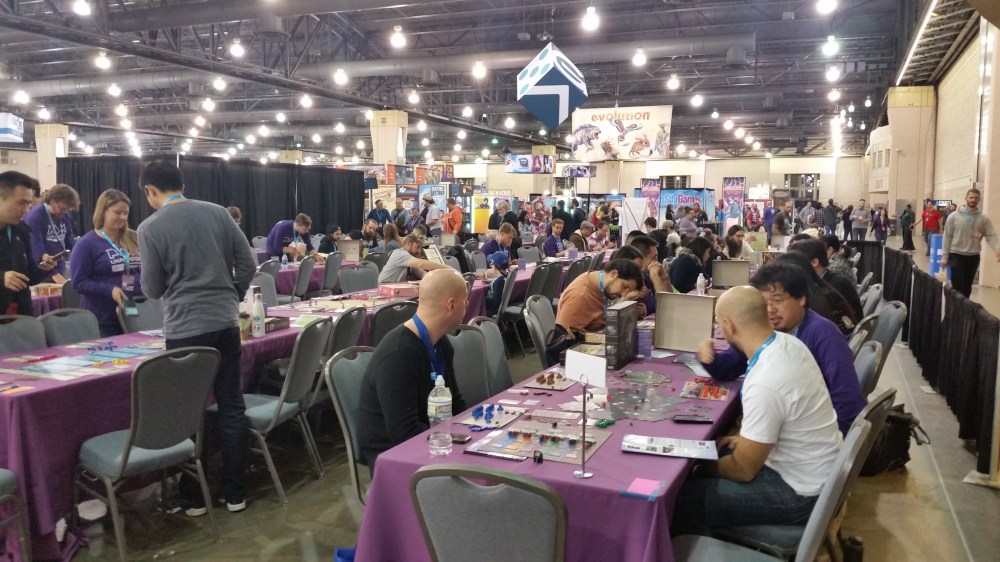
First Look games

Gamers check out the selection of brand new, never-before-seen board games.

“Unplugged has got some of the same cool things about a regular PAX, it’s really more like comparing this to Gen Con (in Indianapolis), which is another tabletop convention,” Prior said. “The only thing that’s really different about this one is that the games are not video games. But it reminds me of the best parts of big tabletop shows, they’re some of the best things I like about PAX.” According to Prior, Unplugged is also inclusive for attendees with physical disabilities, with helpful features like wide aisles, flat ground and legible signs with large fonts.

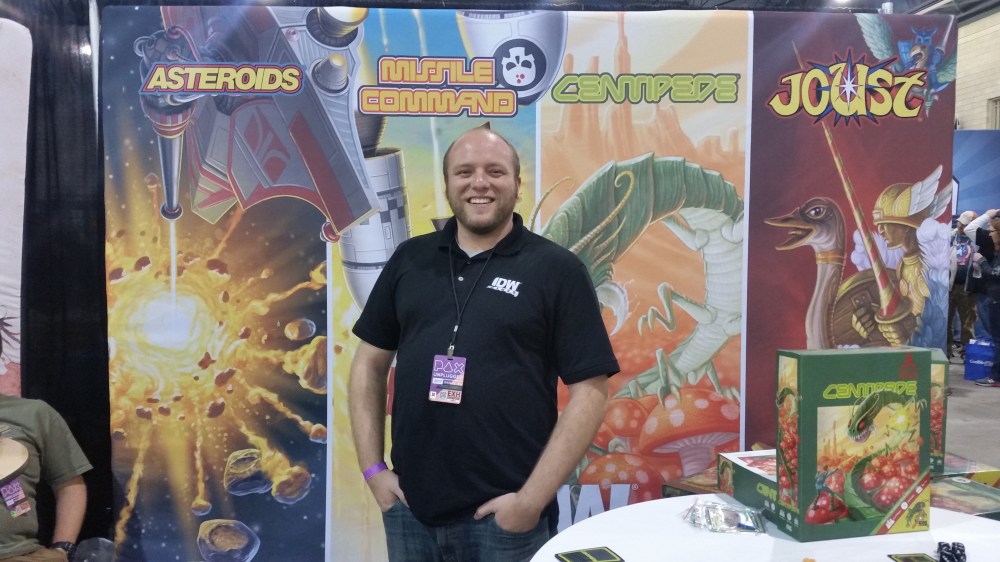
Nearby in the exhibit hall, IDW Games set up a display featuring the recently-produced Centipede, the first in a line of IDW board games created in a partnership with classic video game company Atari and made by local Philly designers Anthony Amato and Nicole Kline of Cardboard Fortress Games.

Ross Thompson

Ross Thompson of IDW Games and Kingdom-Con stands by the newly-released Centipede board game made in a partnership with Atari and local Philly game designers Anthony Amato and Nicole Kline of Cardboard Fortress Games.

Ross Thompson is the Games, Marketing and Events Manager with IDW Games and the founder of Kingdom-Con in San Diego, and he runs a circuit of 20 conventions a year. “I would say that PAX in general does a very good job of creating a culture of people that want to learn games,” he said. “So when you go to a show like Gen Con, or Origins (in Columbus), which are other game industry hardcore cons, those gamers have a very set way of games they play. They’re not as open to trying out now games, where PAX has a very good culture of a gaming group coming up and just diving in.”

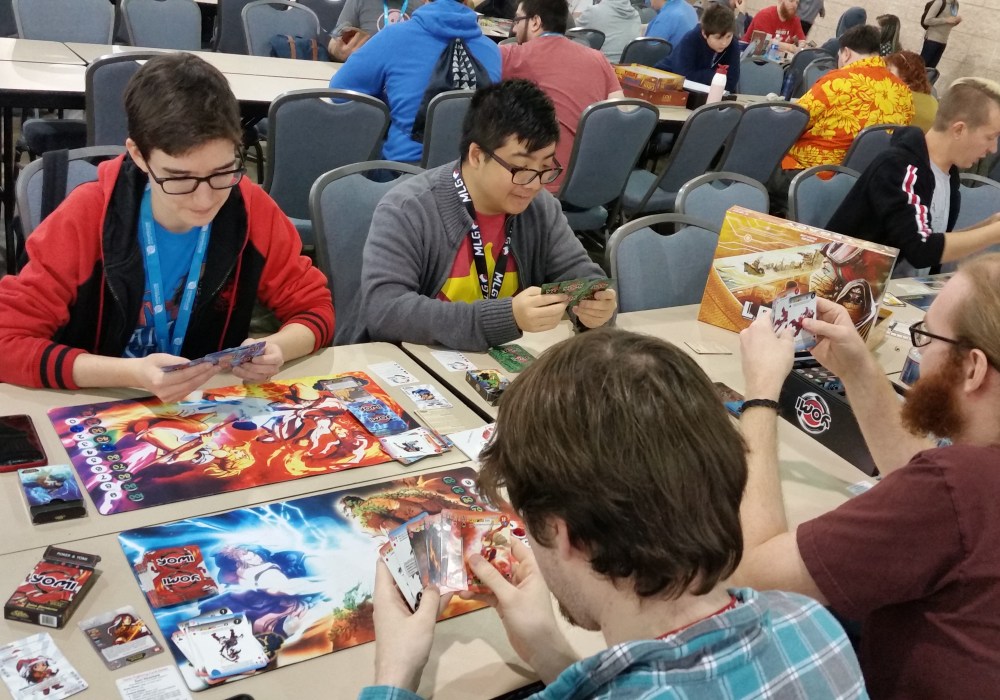
Attendee Carolyn Scullington sat at a table playing two-player matches of the card game Yomi with her husband Dan and friends TJ Ngo and Chris Copel-Kosciesza. Originally from Connecticut, Scullington now lives in New York City. She enjoyed the freeplay area of the convention the most, but the people are what bring her back to the PAX scene.

“I think that PAX in general has a really good community, and I definitely still feel that here,” she said. “That’s part of the reason why I’m the person who’s refreshing Twitter to find out when the badges go on sale for PAX East (in Boston), because it feels like a very welcoming environment. Which I feel like especially for gaming conventions, it does sometimes feel like there’s very ‘us versus them’ dynamics within the gaming community, and we don’t have that at all here. It was really awesome to walk right down the big stretch on day one and see the gender-neutral bathrooms, for instance.”

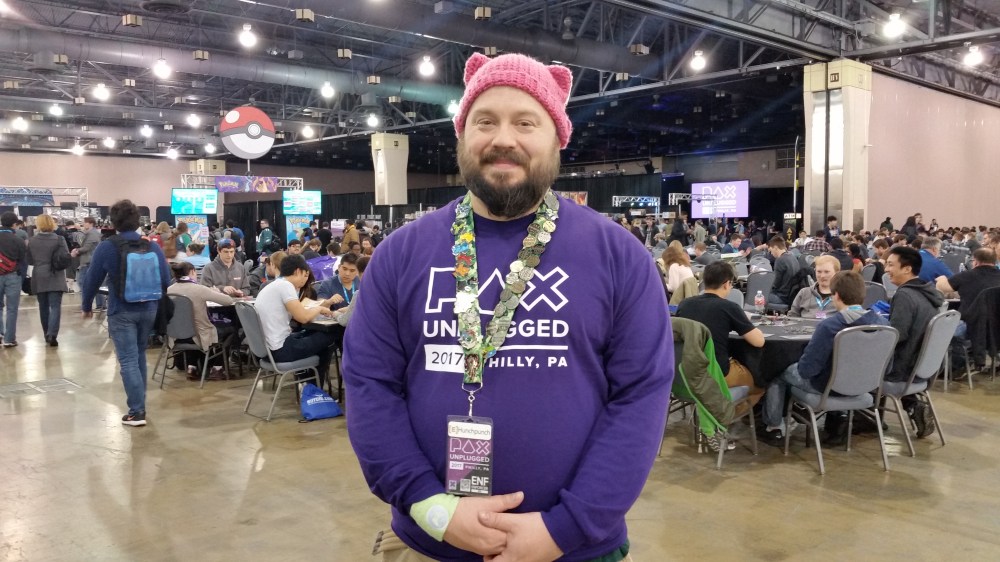
Enforcer HunchPunch

“HunchPunch” works his fifth year as a PAX Enforcer at PAX Unplugged, offering services like answering questions and leading the way.

PAX expos are staffed by a crew of “Enforcers” who are recruited to answer questions, direct guests to different locations and resolve conflicts. They started out as volunteers, but are now paid employees. One Enforcer, HunchPunch, started in Seattle in 2009 and has worked at every single PAX at least once.

“I’m just continuing the tradition of helping out, being a part, doing what I can,” he said. “I attended back sometime ago for the first time, went a couple times, and then decided to apply. It’s real simple, it’s a matter of making the event happen in the same way or have the same feel from whenever I attended for those attending for the first time.”

Omeganauts

Omeganauts are randomly chosen attendees who face off in game challenges to win a prize. Finalists “Curlee” Lena and “Blizkitan” Neal compete in Battleship on the main theatre stage. Lena won.

Like all other PAX’s, this event is sure to get exponentially larger as more people hear about it.  If you’re a local game designer or nerdy creator and would like to set up a table next year, or you’d just like more information on the convention and want to purchase tickets, visit this site.