Creating the Quest: Indie Level Design Tips from PAX Online
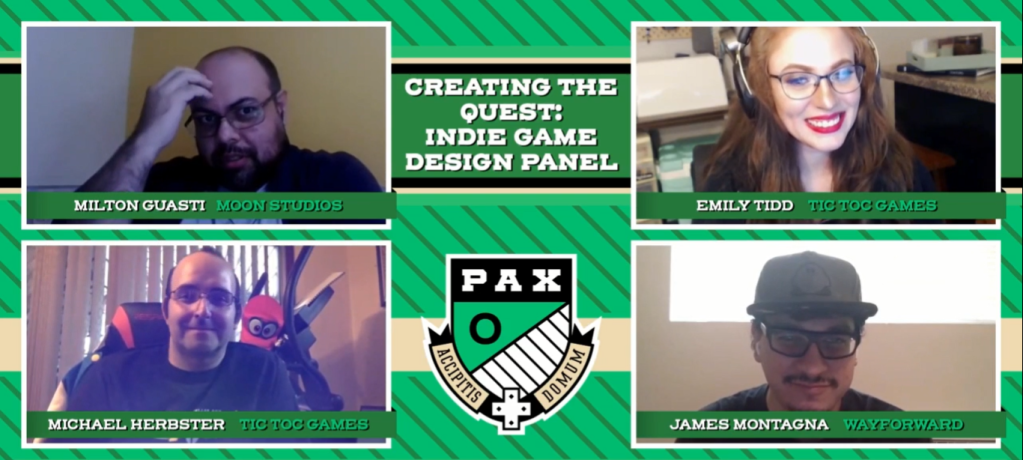
“Creating the Quest” presenters at PAX Online 2020.
You have to admit, 2020 has thrown the world at large for a bit of a loop. Saying this year has been a tad “odd” is an understatement. But we’re finding ways of adapting and chugging along.
You, the reader, may have transitioned from a brick and mortar office to your work-from-home lair, and become a modern vampire who hisses at the mere sight of light and the thought of people doing things outside. Or maybe you’ve just always been that way. Perhaps you are reading this in a hikikomori-like state, holed up in your comfy room with a blanket wrapped around you and infinite snacks at the ready, more than enough to survive whichever new doomsday twist might be around the corner as M. Night Shyamalan laughs in the distance. Weirder still, you could be…normal?
One saving grace of this year, arguably the best, is that games are still here to stay. (Thank goodness!) Whether you just play games or you make them too, this time of year tends to awaken a primal urge in many afflicted gamers: Go to Seattle, attend PAX West, and spend more money than you can rightfully justify.
Usually, tens of thousands of nerds descend upon the Penny Arcade Expo convention halls like a swarm of so many locusts, eager to check out new game company reveals, test out demos, stand awkwardly at the back of concerts featuring chiptunes, synth-pop or geek metal flair, and attend panels by industry experts in the hopes of gaining the knowledge that could help turn them into an industry expert themselves.
Thanks to that-which-shall-not-be-named, the Penny Arcade Expo is not a physical gathering this year, since the annual “con crud” this time around would turn the average post-gaming cold into a potential boss battle. But the organizers have worked tirelessly with the hand they were dealt, and thus PAX Online was born! Starting on September the 12th and running presently through to the 20th, panelists and musicians alike have worked with the convention hosts to give us that sweet gamer content around the clock, and for free at online.paxsite.com!

One of the intermission screens from PAX’s new virtual convention format.
One such offering is the “Creating the Quest” panel that aired on Wednesday, Sept. 16. Emily Tidd, host of the panel and Community Marketing Manager at Tic Toc Games, led the video conference attendees through a series of level design questions intended to give spectators a look at what goes on behind the scenes of game creation.
Indie game designers on the panel included WayForward Director James Montagna (Shantae, Mighty Switch Force!), Tic Toc Games Gameplay Director Michael Herbster (Shovel Knight, B.ARK) and Moon Studios Game Designer Milton Guasti (Ori and the Blind Forest, Project AM2R).
And so, here are a few tips for aspiring independent game designers on how to create levels that keep players wanting more.
Starting the Process
Michael:
- Begin with a pen and paper to jot down your design ideas.
- Build your level using documentation — what are the general emotions and feelings you wish the player to experience? What challenges with the player have to tackle in this level?
- If the team approves of the level concept, the designer must “graybox” it out by turning their vision into a simple but playable model.
- Make sure that someone else plays through it, that the level itself is playable from start to finish, and that enemies are in place. Art can be added afterward.
James:
- When beginning the level design process for a new game, consider the game’s rules as well as the context for each level.
- Learn the player’s navigation, such as how many units the character can jump vertically or horizontally. If any changes are made to the player’s design, it may invalidate the levels you built around it.
- Think about which enemies will debut in each level, how they operate, and how how they will interact with the player on an individual basis.
- Establish a debug or testing room to try out different things, such as testing different kinds of platforms and collision detection, as well as combat mechanics with each kind of enemy.
- Establish a road map and think about where the level stands in regards to the rest of the game. Is your level early on, when the player is still learning the controls? Or have they unlocked all abilities and have every tool at their disposal?
- “In a non-linear exploration game (such as a “Metroidvania”), knowing what tools and abilities [the player] has access to at all times is critical so that you can design around that.”
Adding Fun
Milton:
- Create a player movement that feels smooth.
- Where applicable, create a synergy between movement and combat.
- Carefully craft different combinations of enemies to throw at the player.
Michael:
- It’s important to make sure the player is challenged, but fairly challenged.
- They should feel rewarded for getting through it.
James:
- Orchestrate the experience so that the player feels empowered when you want them to feel that way.
- In room-based games, don’t put an enemy in each one. Design the area with fun in mind and give the player a chance to rest.
- Think about Mega Man, and the long empty hallways you travel through on your way to the boss.
- “It’s important to let the player breathe and be in their head for a minute to stop and acknowledge the fun they’re having.”
- Let the player have fun with new abilities they get, such as putting them in a room where they can try it out without taking damage.
- Turn it into a teaching moment by making it so the player can’t leave the room until they use their ability successfully.

When your home has been your office for too long, you start to see things in your coffee.
Navigating Paths
Milton:
- Add memorable visual landmarks so the player thinks “This particular place is important.” You can use markers like a huge entrance or a statue that stands out from the rest of the environment.
- Give the player visual cues to consider so they’ll think to come back and explore later on in the game.
- You can add small and unobtrusive nuances to get the player’s attention, such as panning the game’s camera to a specific point in the level, playing with a little splash of color, or adding something distinct to an object or place to make it pop or stand out somehow.
Michael:
- Make sure that the art around the area is eye-catching, or add a sheen around things such as breakable objects.
- You can play with light effects to give subtle hints to the player on where they should go without telling them. Add something like a gleam of light or a lamp over a door.
- Make sure players aren’t drawn to areas that will get them killed.
James:
- It’s not just about designing where you want the player to go — it’s also about not drawing their eye to where you don’t want them to go.
- Different eras of gamers may interact with the game differently. “Oldschool gamers, it’s in their DNA to push through every wall to see if you can go through it.”
Narrative Flow
Milton:
- Take world-building into consideration when designing each level or game. Be in touch with the concept artists about what the world looks like. Is there any civilization or technology? How complex is it? All natural?
- If there are any NPC’s (non-playable characters) or inhabitants there, think about their small details. Each NPC has their own side story. “Even if it doesn’t explicitly contribute to the story, it makes the world feel more alive and alluring.”
Michael:
- Make sure control isn’t taken away from the player unless there’s a major event.
- Make sure everything feels fluid.
- Check in with the game team to see that everyone is still holding hands and following the same vision.
James:
- Designing levels driven by narrative gives us the opportunity to introduce a lot of personalities into a game.
- Occasionally, the narrative can serve the purpose of introducing a level design concept. Specific details from the story can tee up events or challenges for the level designer. (Example: magic carpet race plotline in the story turning into a flying carpet challenge level)
Incorporating Color
Michael:
- Make everything visually stunning.
- Focus on putting characters against the background to see if they “pop” correctly.
James:
- Use colors to set navigable paths, such as vibrant colors against a dark background.
- Use colors to set different moods, such as yellow for alertness, or blue tones for calm.
- Accent a special area with overall brighter colors, or effects like a colored tint over everything. The player can see that and sense that there’s a different energy in that area.
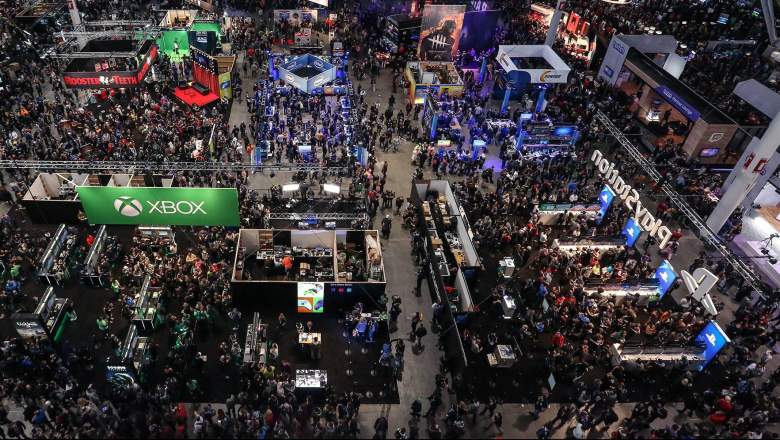
Remember when we could all cram into game conventions like a can of sardines? (Credit: https://blog-ambassadors.xbox.com/)
Measuring Success
Milton:
- Observe playtesters in their natural habitat, from a distance. The more you interfere, the more you tamper with the results. Otherwise, “The moment they do something you don’t want them to do, you’ll say ‘Oh no! Don’t go there! That’s not how it’s supposed to work!'”
- Testers will find issues you don’t see because you’re too close to them.
- Once enough testing is conducted, you’ll start to see patterns where there are spikes in difficulty. You can use this data to tweak the player experience.
- “The sooner you get the opinion of other people, the cheaper the changes will be later on.”
Michael:
- Just get your game in the hands of players. Keep your mouth shut, and watch what they’re doing.
- Ask the players specific questions. If it leads in the wrong direction, you’ll get bad information. Asking “How did you feel about that?” may be too open-ended, but you could ask something like “Was that section hard?” and turn it into useful information and concentrated feedback.
- Find testers with different play styles, including novices and those who don’t consider themselves a hardcore gamer. You can study how they play your game compared to other players.
James:
- It may sound cheesy, but you can conduct a “Smile Test” to see if a player is smiling or nodding and having fun while playing your game for the first time.
- The whole reason games exist is to produce positive reactions and to have fun.
Replay Value
Milton:
- Some fun concepts include things like exploring to fill out a player’s map, or gaining new abilities and then using them to unlock things.
- If possible, add things like speed trials so players can show off their competitive edge.
Michael:
- Add a high score system. Players will be able to track how they’ve improved, or how many enemies they’ve downed.
James:
- Aim for making an experience so fun that players just wanna do it again and again. You can do things like hide treats, which encourages players to go back into a stage and search every nook and cranny to collect them all.
- Craft puzzles so that players want to go back and try again to get a better clear time.
- Put something in an earlier stage that seeds a future event.
If you would like to learn more about the panelists and their work, feel free to give them a follow on Twitter!
@LadyAvianna [Community Marketing Manager, Tic Toc Games], @MichaelHerbStar [Director of Gameplay, Tic Toc Games], @JamesPopStar [Game Designer and Director, WayForward], @DoctorM64 [Game Designer, Moon Studios]
Or, follow PAX itself, @PAX!

Visit now at online.paxsite.com!

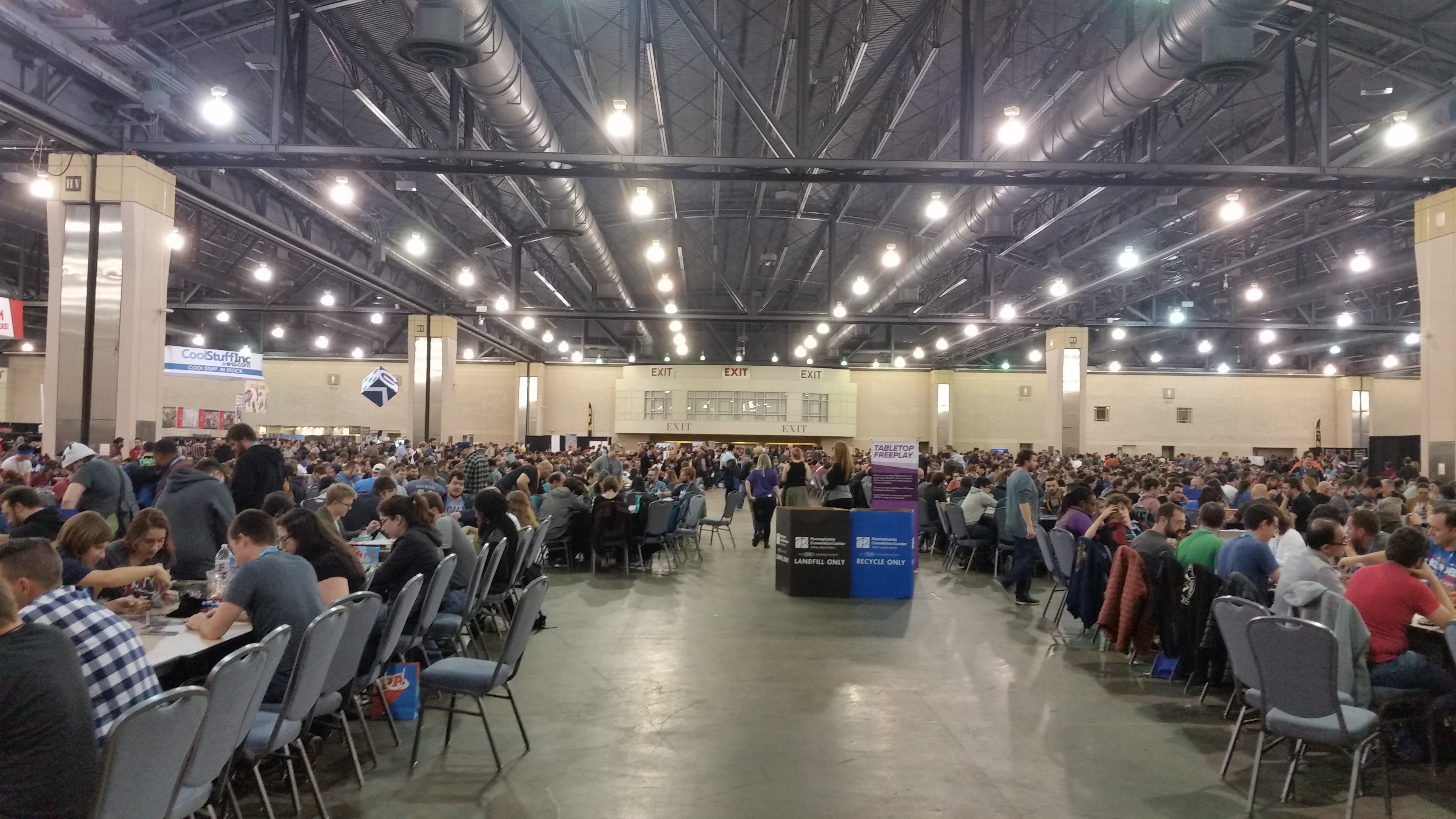


 The Philly Spectacle