Creating the Quest: Indie Level Design Tips from PAX Online
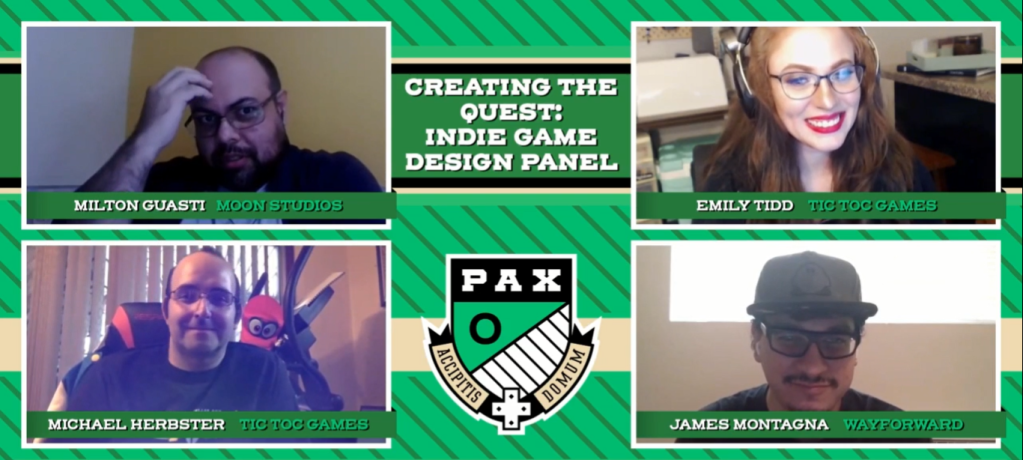
“Creating the Quest” presenters at PAX Online 2020.

You have to admit, 2020 has thrown the world at large for a bit of a loop. Saying this year has been a tad “odd” is an understatement. But we’re finding ways of adapting and chugging along.

You, the reader, may have transitioned from a brick and mortar office to your work-from-home lair, and become a modern vampire who hisses at the mere sight of light and the thought of people doing things outside. Or maybe you’ve just always been that way. Perhaps you are reading this in a hikikomori-like state, holed up in your comfy room with a blanket wrapped around you and infinite snacks at the ready, more than enough to survive whichever new doomsday twist might be around the corner as M. Night Shyamalan laughs in the distance. Weirder still, you could be…normal?

One saving grace of this year, arguably the best, is that games are still here to stay. (Thank goodness!) Whether you just play games or you make them too, this time of year tends to awaken a primal urge in many afflicted gamers: Go to Seattle, attend PAX West, and spend more money than you can rightfully justify.

Usually, tens of thousands of nerds descend upon the Penny Arcade Expo convention halls like a swarm of so many locusts, eager to check out new game company reveals, test out demos, stand awkwardly at the back of concerts featuring chiptunes, synth-pop or geek metal flair, and attend panels by industry experts in the hopes of gaining the knowledge that could help turn them into an industry expert themselves.

Thanks to that-which-shall-not-be-named, the Penny Arcade Expo is not a physical gathering this year, since the annual “con crud” this time around would turn the average post-gaming cold into a potential boss battle. But the organizers have worked tirelessly with the hand they were dealt, and thus PAX Online was born! Starting on September the 12th and running presently through to the 20th, panelists and musicians alike have worked with the convention hosts to give us that sweet gamer content around the clock, and for free at online.paxsite.com!

One of the intermission screens from PAX’s new virtual convention format.

One such offering is the “Creating the Quest” panel that aired on Wednesday, Sept. 16. Emily Tidd, host of the panel and Community Marketing Manager at Tic Toc Games, led the video conference attendees through a series of level design questions intended to give spectators a look at what goes on behind the scenes of game creation.

Indie game designers on the panel included WayForward Director James Montagna (Shantae, Mighty Switch Force!), Tic Toc Games Gameplay Director Michael Herbster (Shovel Knight, B.ARK) and Moon Studios Game Designer Milton Guasti (Ori and the Blind Forest, Project AM2R).

And so, here are a few tips for aspiring independent game designers on how to create levels that keep players wanting more.

Starting the Process

Michael:

  • Begin with a pen and paper to jot down your design ideas.
  • Build your level using documentation — what are the general emotions and feelings you wish the player to experience? What challenges with the player have to tackle in this level?
  • If the team approves of the level concept, the designer must “graybox” it out by turning their vision into a simple but playable model.
  • Make sure that someone else plays through it, that the level itself is playable from start to finish, and that enemies are in place. Art can be added afterward.

James:

  • When beginning the level design process for a new game, consider the game’s rules as well as the context for each level.
  • Learn the player’s navigation, such as how many units the character can jump vertically or horizontally. If any changes are made to the player’s design, it may invalidate the levels you built around it.
  • Think about which enemies will debut in each level, how they operate, and how how they will interact with the player on an individual basis.
  • Establish a debug or testing room to try out different things, such as testing different kinds of platforms and collision detection, as well as combat mechanics with each kind of enemy.
  • Establish a road map and think about where the level stands in regards to the rest of the game. Is your level early on, when the player is still learning the controls? Or have they unlocked all abilities and have every tool at their disposal?
  • “In a non-linear exploration game (such as a “Metroidvania”), knowing what tools and abilities [the player] has access to at all times is critical so that you can design around that.”

Adding Fun

Milton:

  • Create a player movement that feels smooth.
  • Where applicable, create a synergy between movement and combat.
  • Carefully craft different combinations of enemies to throw at the player.

Michael:

  • It’s important to make sure the player is challenged, but fairly challenged.
  • They should feel rewarded for getting through it.

James:

  • Orchestrate the experience so that the player feels empowered when you want them to feel that way.
  • In room-based games, don’t put an enemy in each one. Design the area with fun in mind and give the player a chance to rest.
  • Think about Mega Man, and the long empty hallways you travel through on your way to the boss.
  • “It’s important to let the player breathe and be in their head for a minute to stop and acknowledge the fun they’re having.”
  • Let the player have fun with new abilities they get, such as putting them in a room where they can try it out without taking damage.
  • Turn it into a teaching moment by making it so the player can’t leave the room until they use their ability successfully.

When your home has been your office for too long, you start to see things in your coffee.

Navigating Paths

Milton:

  • Add memorable visual landmarks so the player thinks “This particular place is important.” You can use markers like a huge entrance or a statue that stands out from the rest of the environment.
  • Give the player visual cues to consider so they’ll think to come back and explore later on in the game.
  • You can add small and unobtrusive nuances to get the player’s attention, such as panning the game’s camera to a specific point in the level, playing with a little splash of color, or adding something distinct to an object or place to make it pop or stand out somehow.

Michael:

  • Make sure that the art around the area is eye-catching, or add a sheen around things such as breakable objects.
  • You can play with light effects to give subtle hints to the player on where they should go without telling them. Add something like a gleam of light or a lamp over a door.
  • Make sure players aren’t drawn to areas that will get them killed.

James:

  • It’s not just about designing where you want the player to go — it’s also about not drawing their eye to where you don’t want them to go.
  • Different eras of gamers may interact with the game differently. “Oldschool gamers, it’s in their DNA to push through every wall to see if you can go through it.”

Narrative Flow

Milton:

  • Take world-building into consideration when designing each level or game. Be in touch with the concept artists about what the world looks like. Is there any civilization or technology? How complex is it? All natural?
  • If there are any NPC’s (non-playable characters) or inhabitants there, think about their small details. Each NPC has their own side story. “Even if it doesn’t explicitly contribute to the story, it makes the world feel more alive and alluring.”

Michael:

  • Make sure control isn’t taken away from the player unless there’s a major event.
  • Make sure everything feels fluid.
  • Check in with the game team to see that everyone is still holding hands and following the same vision.

James:

  • Designing levels driven by narrative gives us the opportunity to introduce a lot of personalities into a game.
  • Occasionally, the narrative can serve the purpose of introducing a level design concept. Specific details from the story can tee up events or challenges for the level designer. (Example: magic carpet race plotline in the story turning into a flying carpet challenge level)

Incorporating Color

Michael:

  • Make everything visually stunning.
  • Focus on putting characters against the background to see if they “pop” correctly.

James:

  • Use colors to set navigable paths, such as vibrant colors against a dark background.
  • Use colors to set different moods, such as yellow for alertness, or blue tones for calm.
  • Accent a special area with overall brighter colors, or effects like a colored tint over everything. The player can see that and sense that there’s a different energy in that area.
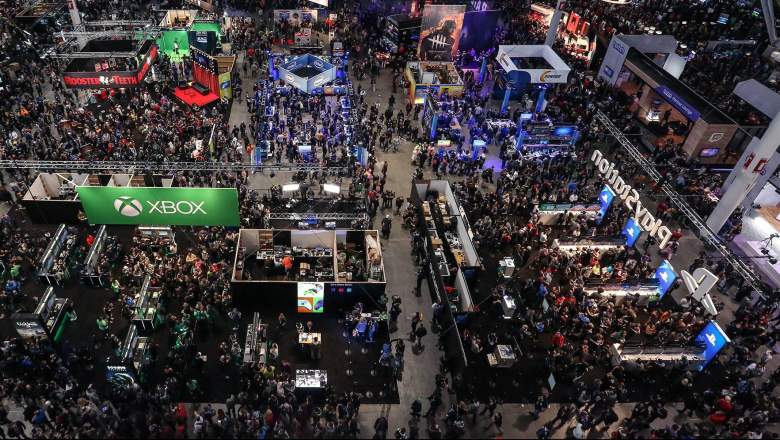
Remember when we could all cram into game conventions like a can of sardines? (Credit: https://blog-ambassadors.xbox.com/)

Measuring Success

Milton:

  • Observe playtesters in their natural habitat, from a distance. The more you interfere, the more you tamper with the results. Otherwise, “The moment they do something you don’t want them to do, you’ll say ‘Oh no! Don’t go there! That’s not how it’s supposed to work!'”
  • Testers will find issues you don’t see because you’re too close to them.
  • Once enough testing is conducted, you’ll start to see patterns where there are spikes in difficulty. You can use this data to tweak the player experience.
  • “The sooner you get the opinion of other people, the cheaper the changes will be later on.”

Michael:

  • Just get your game in the hands of players. Keep your mouth shut, and watch what they’re doing.
  • Ask the players specific questions. If it leads in the wrong direction, you’ll get bad information. Asking “How did you feel about that?” may be too open-ended, but you could ask something like “Was that section hard?” and turn it into useful information and concentrated feedback.
  • Find testers with different play styles, including novices and those who don’t consider themselves a hardcore gamer. You can study how they play your game compared to other players.

James:

  • It may sound cheesy, but you can conduct a “Smile Test” to see if a player is smiling or nodding and having fun while playing your game for the first time.
  • The whole reason games exist is to produce positive reactions and to have fun.

Replay Value

Milton:

  • Some fun concepts include things like exploring to fill out a player’s map, or gaining new abilities and then using them to unlock things.
  • If possible, add things like speed trials so players can show off their competitive edge.

Michael:

  • Add a high score system. Players will be able to track how they’ve improved, or how many enemies they’ve downed.

James:

  • Aim for making an experience so fun that players just wanna do it again and again. You can do things like hide treats, which encourages players to go back into a stage and search every nook and cranny to collect them all.
  • Craft puzzles so that players want to go back and try again to get a better clear time.
  • Put something in an earlier stage that seeds a future event.

If you would like to learn more about the panelists and their work, feel free to give them a follow on Twitter!

@LadyAvianna [Community Marketing Manager, Tic Toc Games], @MichaelHerbStar [Director of Gameplay, Tic Toc Games], @JamesPopStar [Game Designer and Director, WayForward], @DoctorM64 [Game Designer, Moon Studios]

Or, follow PAX itself, @PAX!

Visit now at online.paxsite.com!
PAX Unplugged celebrates gaming’s inclusive future

As seen on Technical.ly Philly

The Pennsylvania Convention Center featured tabletop games galore last month — and, more importantly, players of all stripes.


Dragons and castles, sinking battleships and miniature Space Marines. What do they all have in common? A table, some pieces and people who love interactive storytelling.

Tabletop games took the main stage at the inaugural PAX Unplugged convention, including board games, card games and roleplaying games like Dungeons & Dragons. The event took place at the Pennsylvania Convention Center in Philadelphia last month.

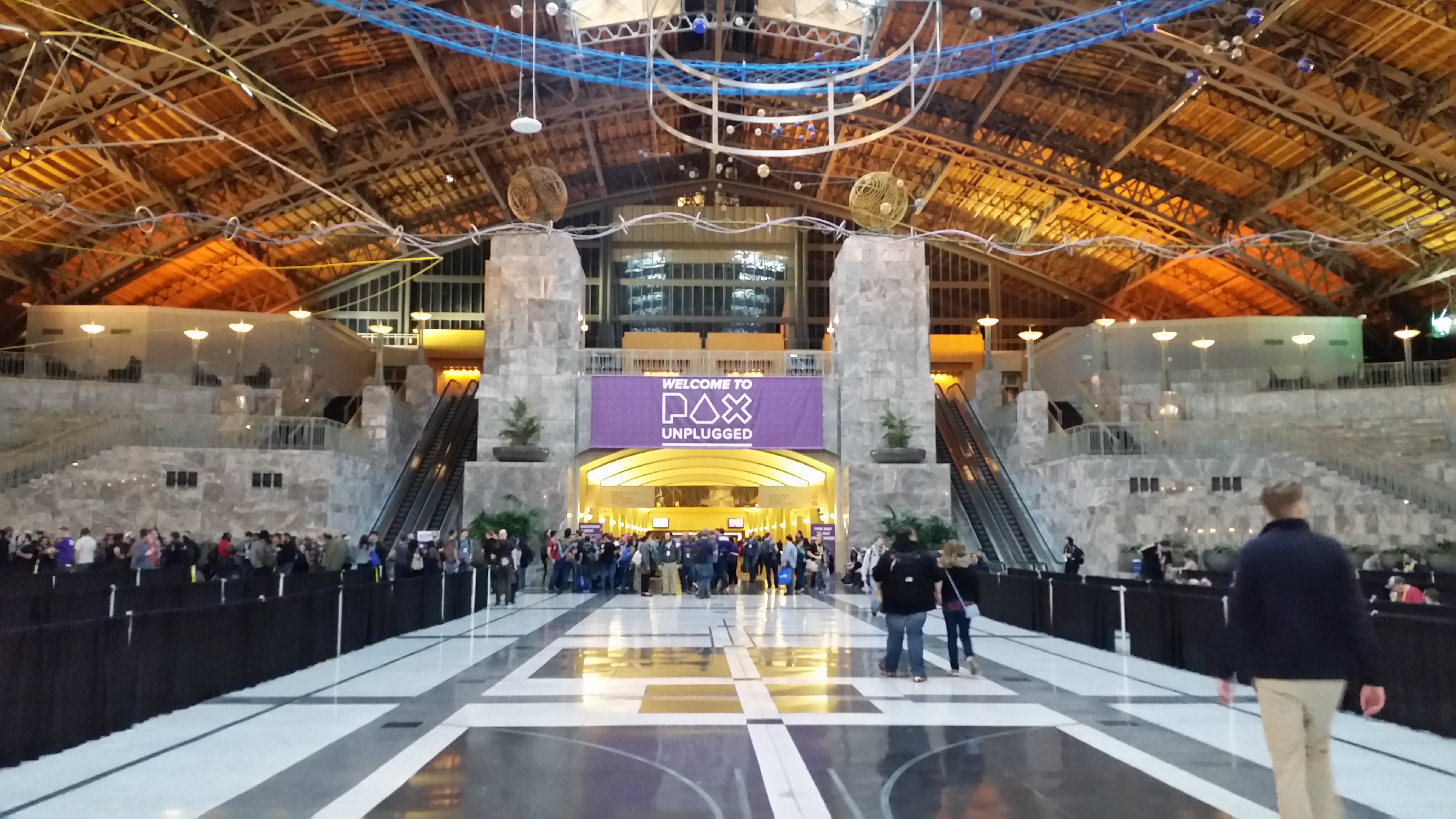
PAX Entrance

Attendees walk through the entrance to PAX Unplugged in the Pennsylvania Convention Center.

Like other PAX events in Seattle, Boston, San Antonio and Melbourne, Australia, Unplugged includes more things than you can roll a die at. Such attractions include an exhibit hall, a tabletop freeplay room with a game-borrowing library and space for hundreds of players, a “First Look” area to see brand-new games and an “Alpha Build” room to playtest indie games.

The convention has also given marginalized groups a voice with the inclusion of the “Diversity Lounge,” which this year included representatives from I Need Diverse Games, local advocate and cosplayer Jay Justice, Toronto Gaymers and mental health advocates TakeThis.org.

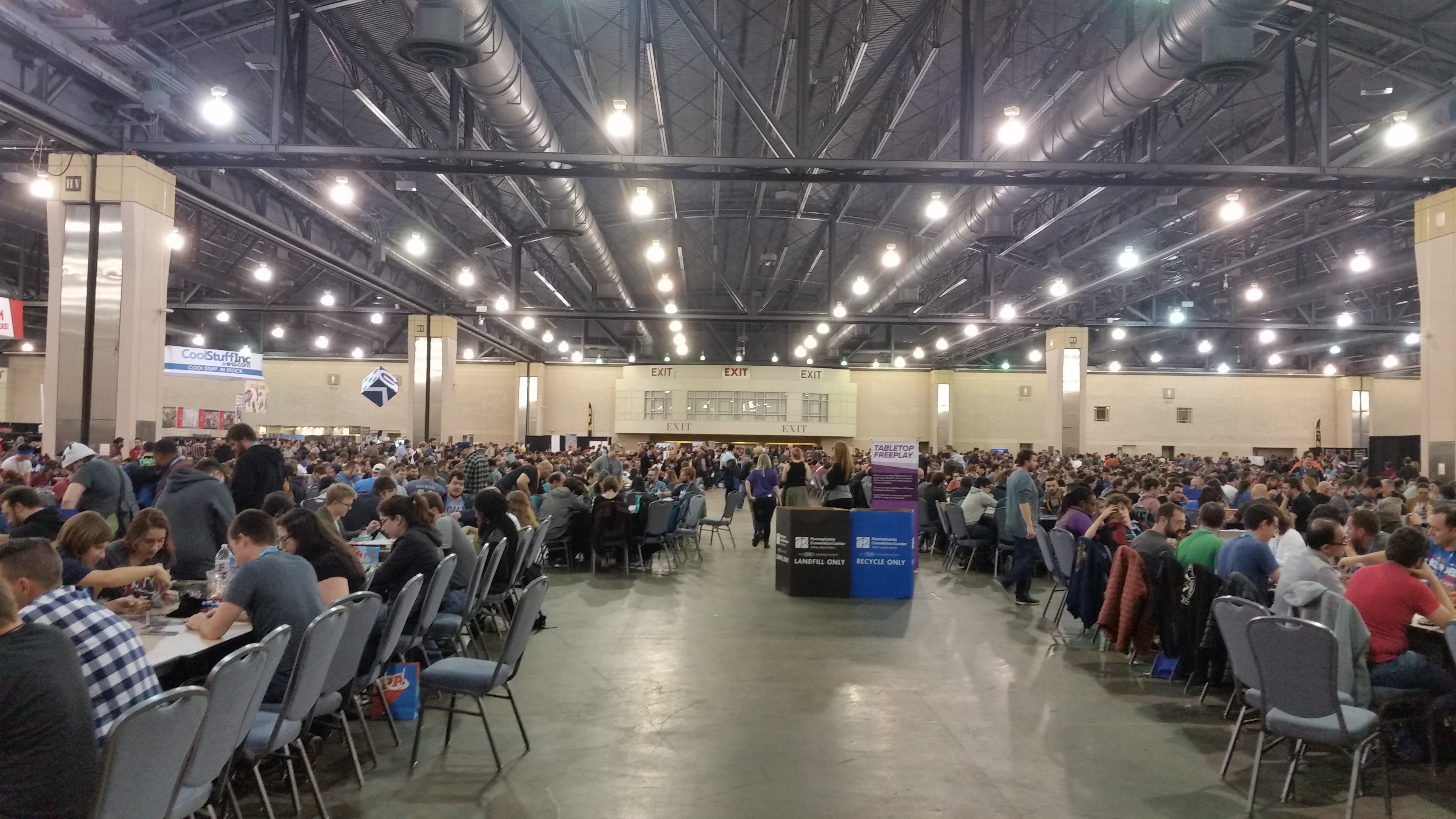
Freeplay room

Freeplay Room: Hundreds of attendees check out games from the board game library to play with their friends.

One panel discussion, “Organizing Play: The Perils and Pitfalls of Gathering Gamers,” centered around how to create spaces that make people feel welcome to play in.

“Any good nerd who stumbles into your world, you want to trick them into staying and playing games with you,” said panel presenter Melissa Lewis-Gentry, business manager of Modern Myths in Northampton, Mass. “I will pair new people with a friendly veteran, and say ‘Here is a new person, can you take care of them?’ Be okay with losing the board game and telling them all the right strategies.”

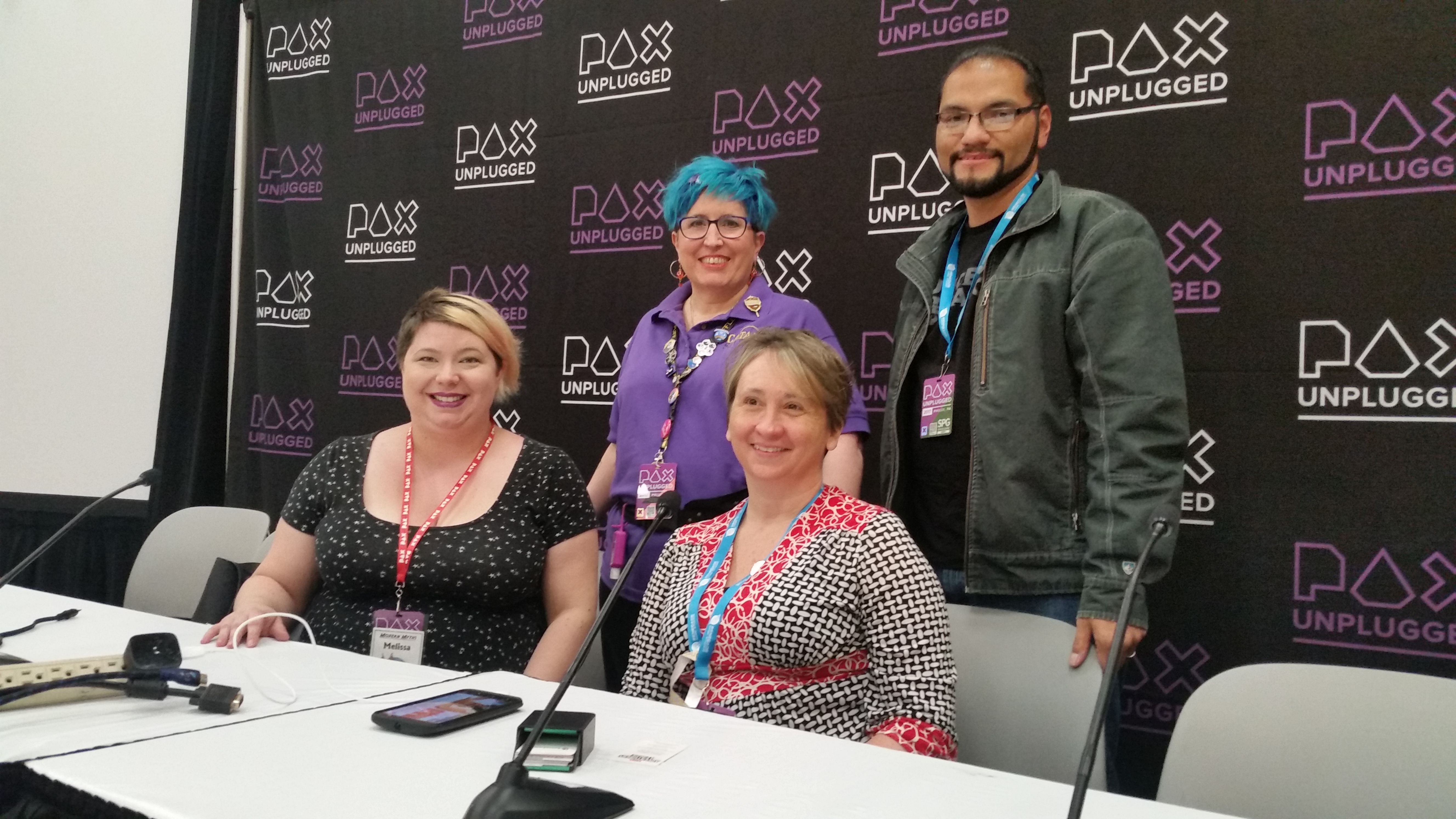
Panel Speakers

Left to right: Panel speakers Melissa Lewis-Gentry, Donna Prior, Maury Brown and Robert Adducci pose at the end of their “Organizing Play – The Perils and Pitfalls of Gathering Gamers” panel.

Another presenter, Donna Prior, prefers to host games in a venue other than a game store, because new people can find the clientele intimidating. “Nobody wants to feel stupid,” they said. “And when trying to market to casual gamers, don’t call them ‘gamers.’ There’s a certain perspective on what gamers are.”

Prior is the organized play coordinator of Catan Studio, as well as founder and executive director of OrcaCon, an inclusive tabletop convention in Bellevue, Wash., that takes place each January. OrcaCon is going on its third year, and the new theme puts indigenous American game designers at the forefront. They first got involved with gaming through Dungeons & Dragons in the ’80s, and then Magic: The Gathering in the ’90s. Now they travel throughout North America and the UK to teach the game Settlers of Catan and host business meetings in Germany with the game’s creator and the rest of the team.

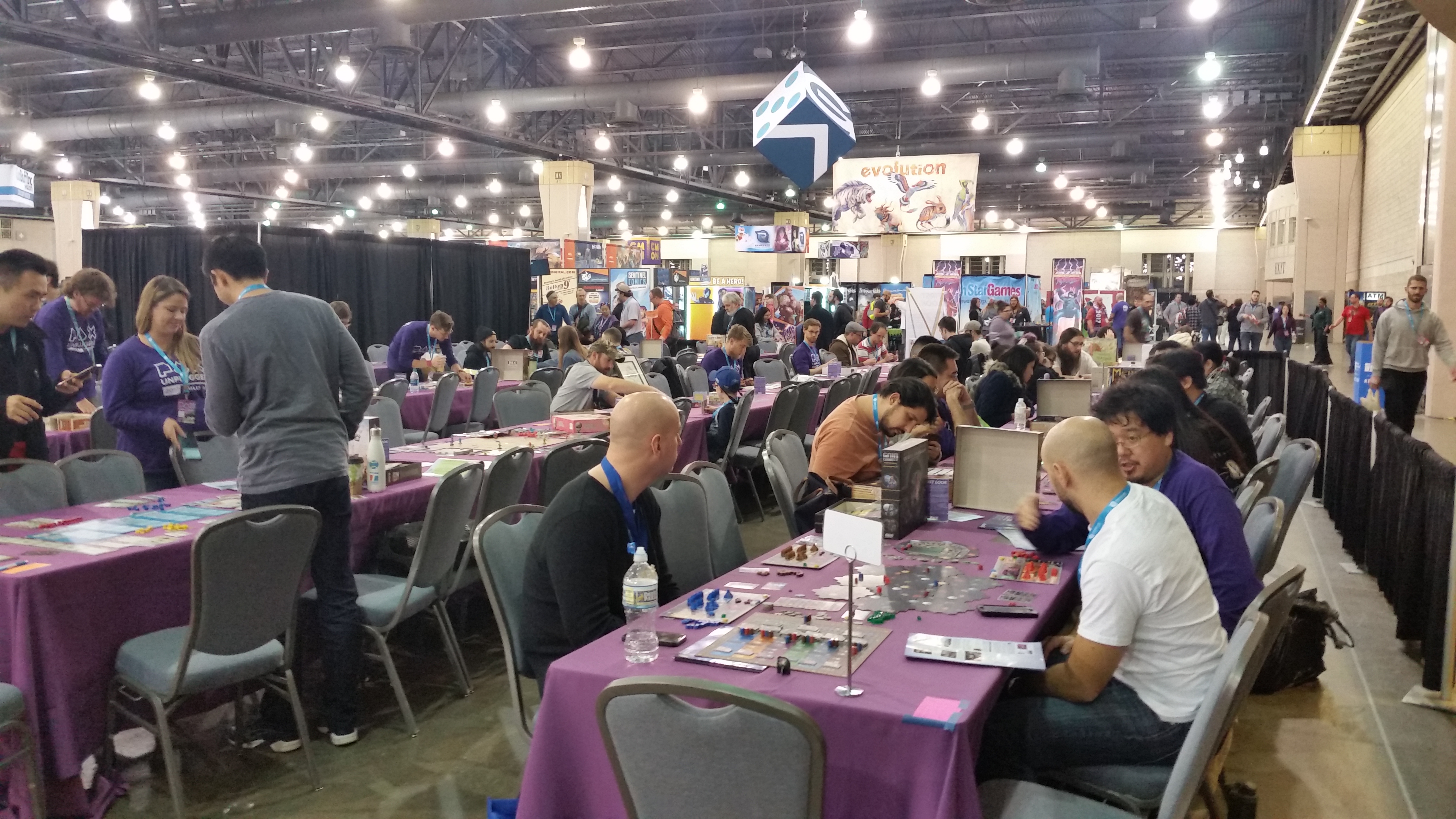
First Look games

Gamers check out the selection of brand new, never-before-seen board games.

“Unplugged has got some of the same cool things about a regular PAX, it’s really more like comparing this to Gen Con (in Indianapolis), which is another tabletop convention,” Prior said. “The only thing that’s really different about this one is that the games are not video games. But it reminds me of the best parts of big tabletop shows, they’re some of the best things I like about PAX.” According to Prior, Unplugged is also inclusive for attendees with physical disabilities, with helpful features like wide aisles, flat ground and legible signs with large fonts.

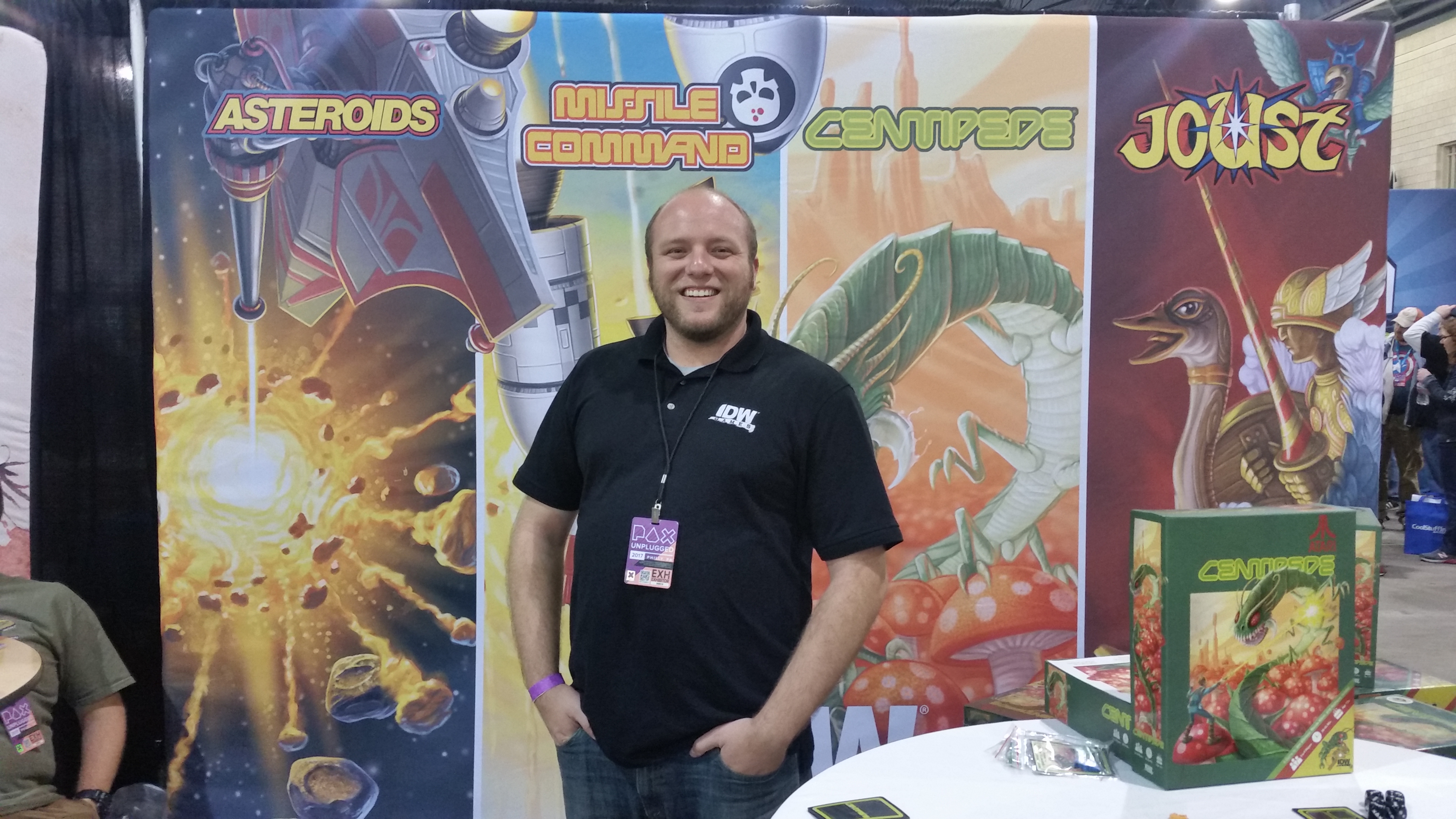
Nearby in the exhibit hall, IDW Games set up a display featuring the recently-produced Centipede, the first in a line of IDW board games created in a partnership with classic video game company Atari and made by local Philly designers Anthony Amato and Nicole Kline of Cardboard Fortress Games.

Ross Thompson

Ross Thompson of IDW Games and Kingdom-Con stands by the newly-released Centipede board game made in a partnership with Atari and local Philly game designers Anthony Amato and Nicole Kline of Cardboard Fortress Games.

Ross Thompson is the Games, Marketing and Events Manager with IDW Games and the founder of Kingdom-Con in San Diego, and he runs a circuit of 20 conventions a year. “I would say that PAX in general does a very good job of creating a culture of people that want to learn games,” he said. “So when you go to a show like Gen Con, or Origins (in Columbus), which are other game industry hardcore cons, those gamers have a very set way of games they play. They’re not as open to trying out now games, where PAX has a very good culture of a gaming group coming up and just diving in.”

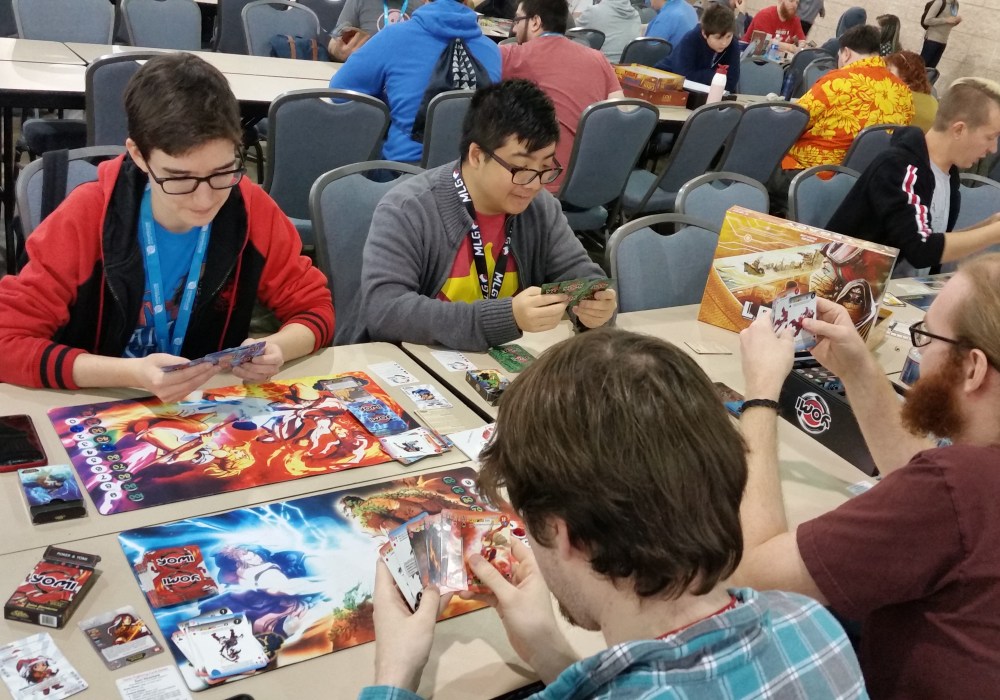
Attendee Carolyn Scullington sat at a table playing two-player matches of the card game Yomi with her husband Dan and friends TJ Ngo and Chris Copel-Kosciesza. Originally from Connecticut, Scullington now lives in New York City. She enjoyed the freeplay area of the convention the most, but the people are what bring her back to the PAX scene.

“I think that PAX in general has a really good community, and I definitely still feel that here,” she said. “That’s part of the reason why I’m the person who’s refreshing Twitter to find out when the badges go on sale for PAX East (in Boston), because it feels like a very welcoming environment. Which I feel like especially for gaming conventions, it does sometimes feel like there’s very ‘us versus them’ dynamics within the gaming community, and we don’t have that at all here. It was really awesome to walk right down the big stretch on day one and see the gender-neutral bathrooms, for instance.”

Enforcer HunchPunch

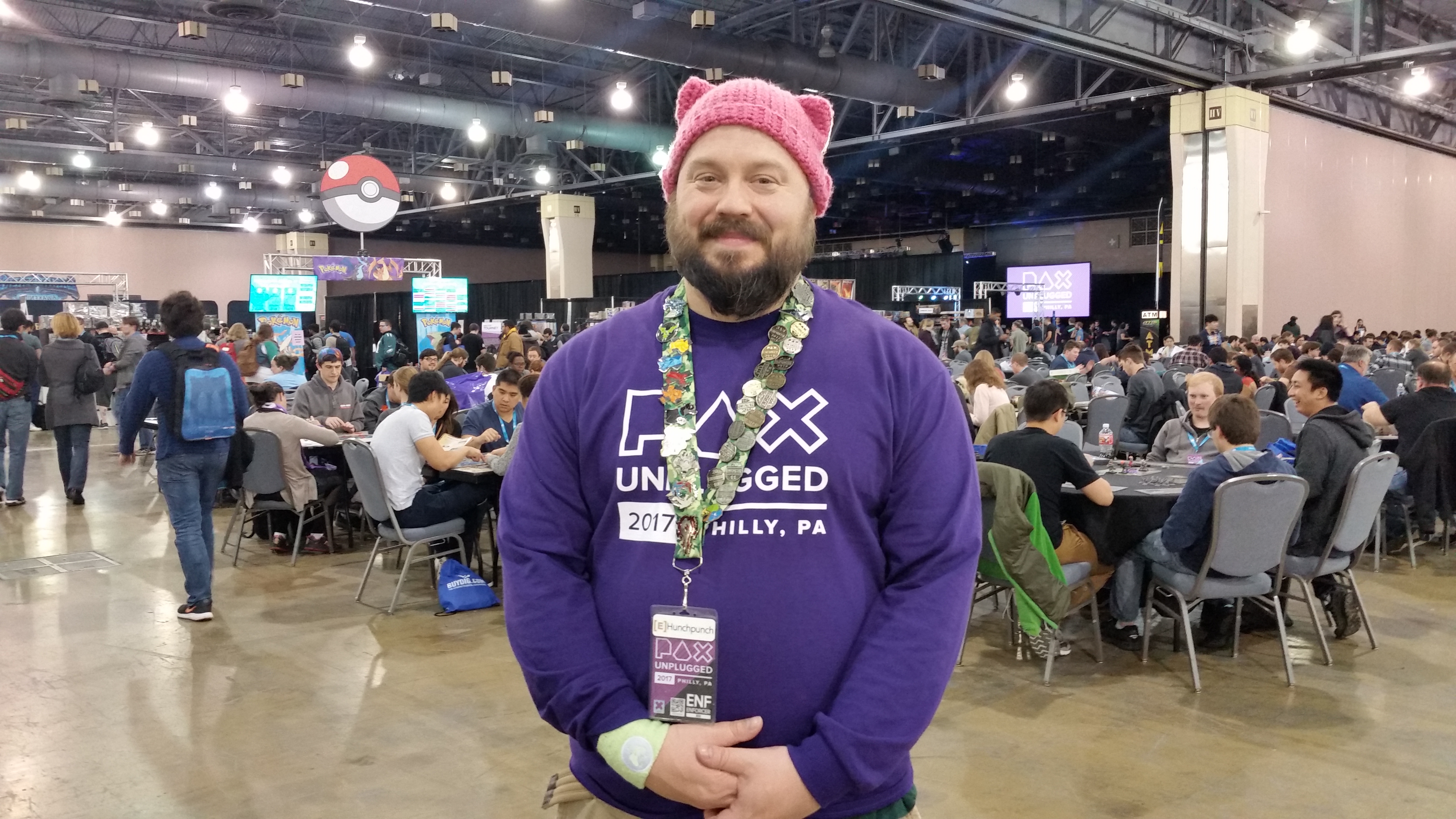
“HunchPunch” works his fifth year as a PAX Enforcer at PAX Unplugged, offering services like answering questions and leading the way.

PAX expos are staffed by a crew of “Enforcers” who are recruited to answer questions, direct guests to different locations and resolve conflicts. They started out as volunteers, but are now paid employees. One Enforcer, HunchPunch, started in Seattle in 2009 and has worked at every single PAX at least once.

“I’m just continuing the tradition of helping out, being a part, doing what I can,” he said. “I attended back sometime ago for the first time, went a couple times, and then decided to apply. It’s real simple, it’s a matter of making the event happen in the same way or have the same feel from whenever I attended for those attending for the first time.”

Omeganauts

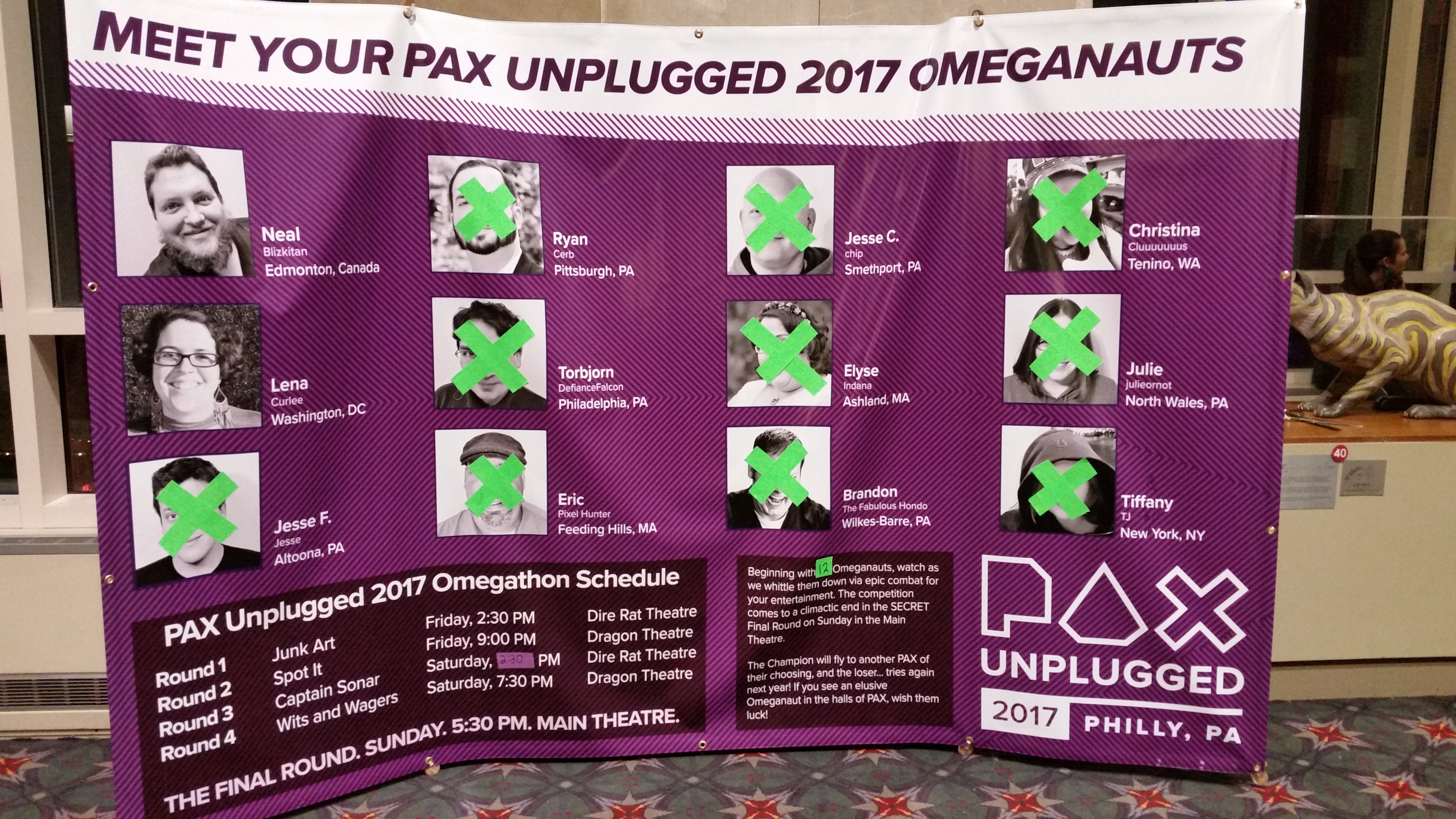
Omeganauts are randomly chosen attendees who face off in game challenges to win a prize. Finalists “Curlee” Lena and “Blizkitan” Neal compete in Battleship on the main theatre stage. Lena won.

Like all other PAX’s, this event is sure to get exponentially larger as more people hear about it.  If you’re a local game designer or nerdy creator and would like to set up a table next year, or you’d just like more information on the convention and want to purchase tickets, visit this site.

Indie Arcade Showcase Brings Crowd to Colorspace

As seen on Geekadelphia

First Fridays are a chance for everyone to go out into the city and see the new works at the forefront of the art world. Usually, viewers see traditional mediums such as paintings and digital art on display, and occasionally a sculpture. November’s offering brought something different to the table – an independent game developer night.

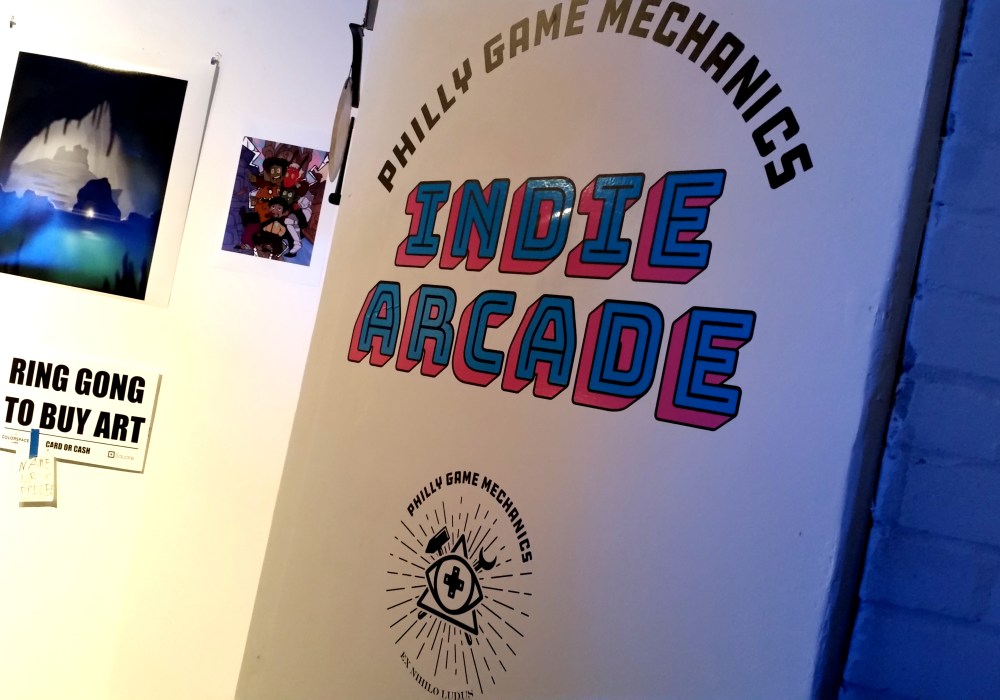
Colorspace Labs in Kensington, Philadelphia, normally a photo/video studio and coworking office, hosted the Indie Arcade on Friday the 3rd. From 6 to 11 p.m., hundreds of excited patrons browsed the showcase of games by developers from the Philly Game Mechanics and lined up for free beer and snacks while next-door neighbors Do It Now T-shirts were showing off their screenprinting setup, DJ Phonographiq provided the tunes and a projector displayed abstract clips on the wall outside.

Players

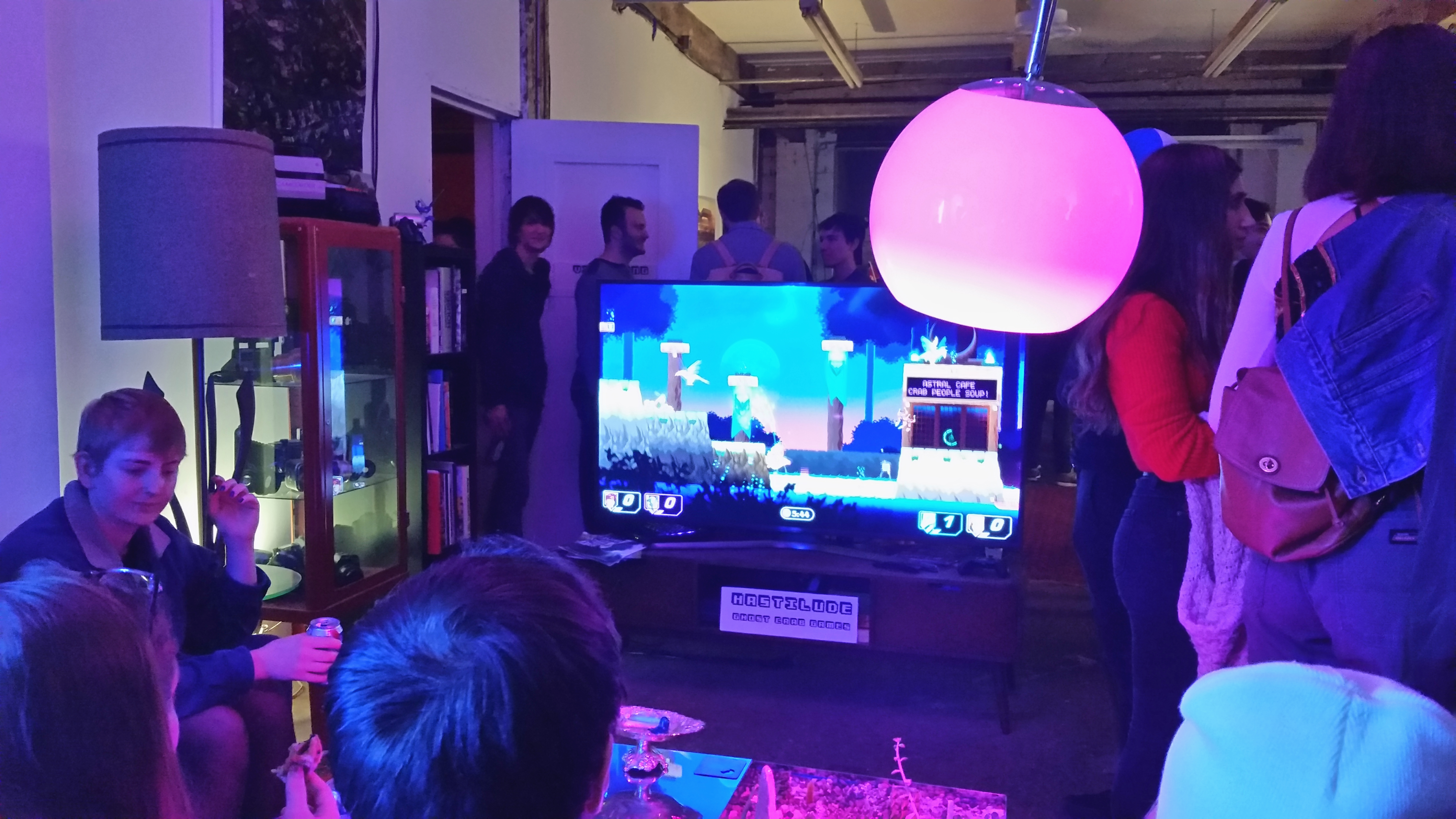
Several players gather on a couch to play the beat-’em-up game Hastilude.

Independent developers showcased their games The Come Up, Hastilude, Vive Pong, Sole, Disco Ships and Why Are We Running?, ranging in genre from virtual reality adventures to beat-’em-ups and rhythm-based action, each set up at a different station in the room. In addition, various game-related prints were hung on the wall.

The game Disco Ships features frenzied multiplayer mayhem in space, wherein players choose their weapons and fly around the screen trying to shoot and trap others in environmental hazards. The work is reminiscent of Gradius but gameplay remains on the same screen rather than side-scrolling. Creator Brian Palladino worked on the game in his free time, but finished it up for a school project at Philadelphia University before he graduated in 2015.

“I’ve always been a fan of couch multiplayer games, so that influenced my direction a lot on Disco Ships,” Palladino wrote in an email interview. “Otherwise, it all started from wanting to create and actually finish a game. I’d worked on a few scratch projects to get the feel for programming, and working in Unity and settled on something smaller to keep my scope down.” Palladino first discovered Philly Game Mechanics from his university professor, who invited the students to visit. Nearly two years later, he came back with his own game to show off and he’s been attending ever since.

Philly Game Mechanics meet up twice a month to do a “game jam” that starts on the first Thursday and ends on the third to develop new games. They also run Philly Game Jam and Global Game Jam events that run for 24 or 48 hours, in addition to tournaments and non-competitive game nights. They’ve hosted for almost six years now, but this event was their largest one yet.

Stephen Pettit of Get Warmer Games is responsible for bringing the developers together for First Friday. He met Colorspace owner Charles Cerrone in college. “We lived across the hall from each other in freshman year and we really bonded over bikes and being goofballs and stuff,” Pettit said. “I started helping out around the local indie game scene, and Shan (Charles) has been running these First Friday gallery events out of this space for a couple months, and I was like, I have all these people who need an audience!”

No experience is needed to come to Philly Game Mechanics events. “You don’t even have to play games,” Pettit said. “We have members from all art forms and disciplines. Personally I don’t think anyone is an aspiring game developer, people start making games as children so everyone is already more than qualified.”

N64Controllers

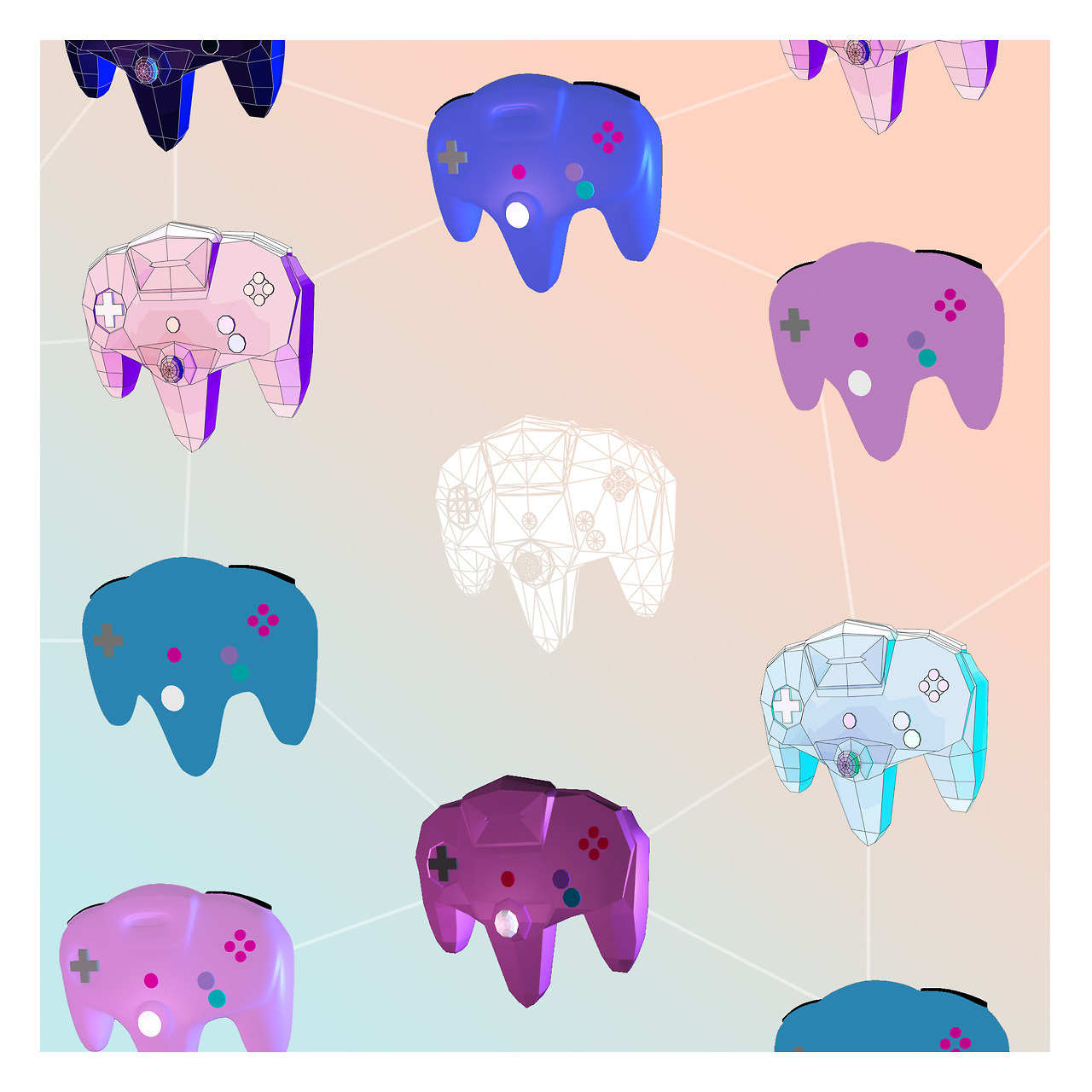
Rachel L. Stine’s print on display at Colorspace on First Friday. Nintendo 64 game controller design made in Autodesk Maya and Photoshop.

Rachel L. Stine is a game designer and also one of the artists who contributed game-related art pieces to display on the wall during the event. She started going to PGM meetups several years ago, back when it was simply called Philly Dev Night.

“I was in school for game design and wanted to get out of the college bubble I had been in, and just really immediately loved the crowd there and everyone’s willingness to just make small experimental projects together and collaborate,” she wrote in a Facebook interview. “I always tell people I got into game design by accident, which is mostly true. As a high school student touring Drexel I got lost on the fashion design tour and ended up in the digital media department, and they won me over. But even before that, I’ve always been an artist and a maker, and I’ve been inseparable from a computer since a very young age, so intersections of art and technology have just always been something I’m drawn to.”

For Stine, it’s part hobby, part career. “I do some contract work in games and animation and sell my own work,” she wrote. “But I also split that time with another job outside the arts field, which I find is a fulfilling way to keep doing the weird small projects I want to do while maintaining some stability in my life.”

For the art show, she wanted to make a game-related print that didn’t belong to a specific game or series. “I’ve honestly just been fascinated by the Nintendo 64 controller for a long time,” she wrote. “There’s a pretty strong consensus that it’s terribly designed, but because it’s iconic and the Nintendo 64 is such a beloved system, everyone just has this affection for it anyway, and I love that. I made the piece by 3D modeling a controller in Autodesk Maya, rendering different versions — low-poly blocky ones, smooth reflective ones, et cetera — and then arranging them and adding details in Photoshop.”

charles

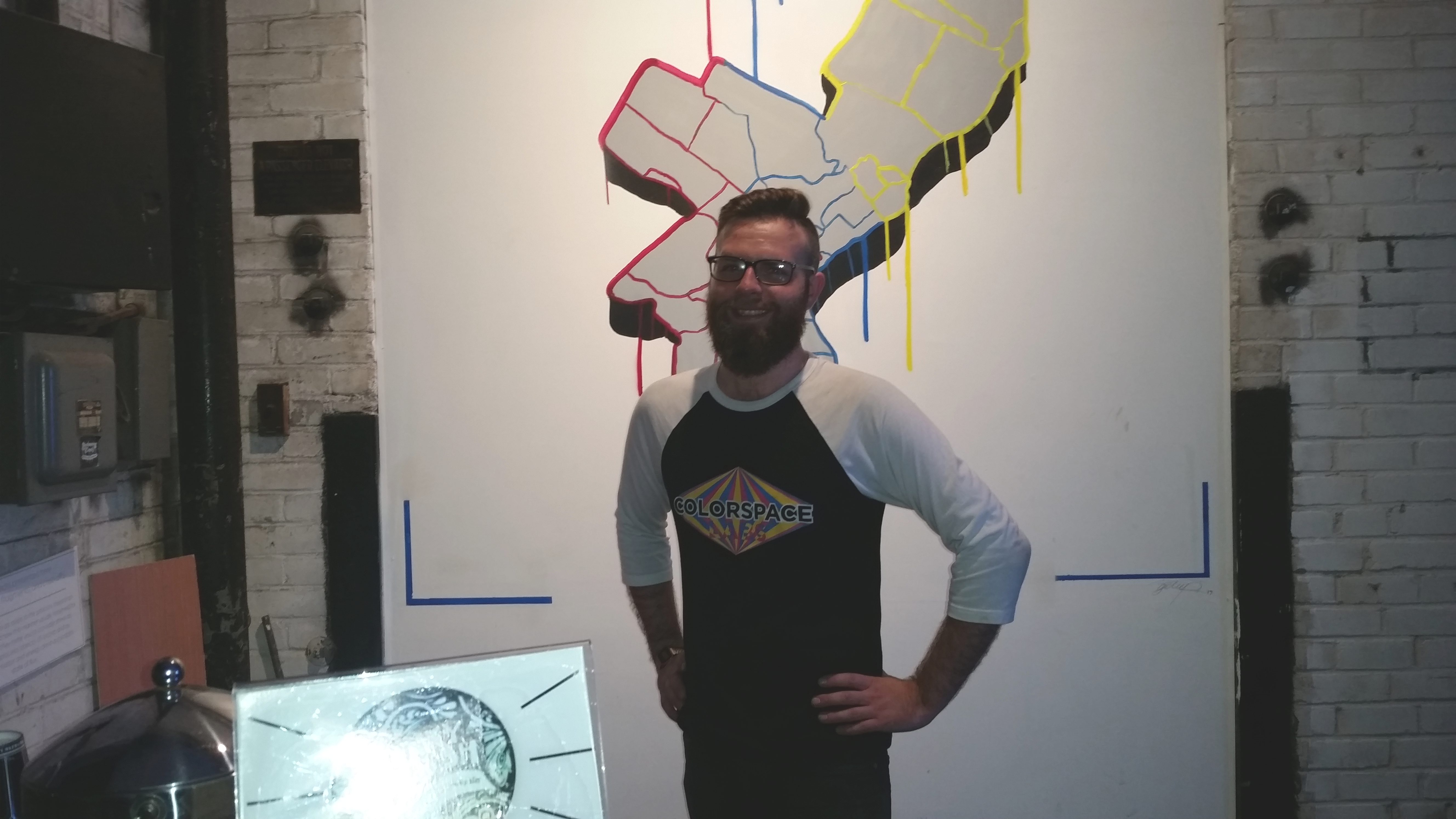
Charles “Shan” Cerrone of Colorspace Labs poses during the First Friday Indie Arcade.

Colorspace owner and JUMP Philly photo editor Charles Cerrone has worked with co-owner Mike Colosimo since 2010. They began as a photo and video production company, moved into their first studio in 2014, and expanded to their current location in the summer of 2016.

“We’re not up here to sell, to make money off of this, we’re here because we want to let our resources be a cost-effective way for young artists, independent artists, different kinds of artists, to be able to tell their story, do their art, make their work happen,” Cerrone said. “And that’s so that’s why we curated this space together, to be somewhere that people can come to work. But every First Friday we bring together this community of people, and it’s always something different, sometimes it’s photography, sometimes it’s graphic design, sometimes it’s screenprinting. Tonight it’s video games, it’s 3D art, it’s all these amazing things that you might not think are going on in Philly, but they are, and we want these people to have a platform.”

Red Bull sponsored the event by providing monitors to run the games off of, and Pabst Blue Ribbon, Faber vodka and Funky Fresh kombucha provided the open bar.


The next PGM event is the Iron Chef Jam 3, 7 – 10 p.m. on Thursday, Nov. 16. It will be held at Indy Hall, 399 Market St., Suite 360. Instead of video games, developers have to make analog games that can be created out of provided materials.

The Philly Game Mechanics are a 501c3 non-profit with help from Philadelphia Culture Trust. They are always looking for sponsors and donors. For more information, visit the Philly Game Mechanics website or donate to their Patreon.

For next month’s First Friday on Dec. 1st, Colorspace will feature the works of Philadelphia designer Nick Cassway. The details are currently unrevealed, but they will turn the entire gallery into a blacklight room. In the future, they hope to host another indie arcade in the springtime. Find out more info about the venue here.